Hey, I hope everyone is doing okay tonight.
I wanted to share some personal thoughts because it’s been a long day. I’m taking a short break right now, and it looks like a long night ahead.
My family and friends often wonder how I do it, especially at my age. I just turned 68. I’ve performed more than 8,500 heart surgeries, and sometimes my colleagues wonder the same thing, particularly on difficult days like today.
Thankfully, our patients are doing well.
Hospitals never close. They’re open 24 hours a day, seven days a week. The lights are always on. On any given night, inside an operating room, there is a team of surgeons, anesthesiologists, nurses, perfusionists, physician assistants, nurse practitioners, and technicians all working together to save a single patient’s life.
In those moments, there is no room for fatigue. The stakes are simply too high. When a patient is critically ill, there is no pause button. There is no opportunity to say, “Let’s continue tomorrow.”
Every decision matters. Every movement matters. Every second matters.
People often wonder what it’s like to be a heart surgeon. They see the major operations, but what they don’t see are the years of preparation and focus. It takes sixteen years after high school: four years of college, four years of medical school, and eight years of residency training.
I’ve now been doing this work for 35 years, and what keeps us going isn’t just skill or training. It’s the extraordinary team that stands behind us.
It’s the scrub nurse who anticipates your next move. It’s the anesthesiologist monitoring every heartbeat and blood pressure change. It’s the perfusionist managing the heart-lung machine. It’s the physician assistants, nurses, and ICU staff who continue fighting for the patient long after the operation is complete.
No one saves a life alone.

While we’re focused on the patient in front of us, we never forget the family waiting for news. Somewhere in a waiting room, at home, or by the phone, there are parents, spouses, children, and friends hoping and praying for good news.
They have entrusted us with someone they love, and you carry that responsibility with you every minute.
Sometimes the outcome is joyful. Sometimes, despite every effort, every ounce of experience, and every available resource, it isn’t.
Those are the moments that stay with you.
The faces you never forget.
The conversations with families that break your heart.
Yet when the sun comes up, you keep going. Another day. Another night on call. Another patient who needs your full attention. Another family searching for hope.
There are times when I wonder how many years this profession has taken from my own life. After 8,500 operations, countless sleepless nights, and decades of carrying the weight of life-and-death decisions, I suspect the answer may be more than a few.
But if you asked whether I would do it all again, my answer is simple:
Absolutely.
Because despite the stress, the sacrifices, and the sleepless nights, there is no greater privilege than being trusted to care for another human being when they need you most.
And there is no greater honor than walking that journey with an extraordinary team dedicated to the same mission.
I’ve never walked alone. I’ve always been surrounded by remarkable teams.
I wouldn’t change a thing.
God bless.
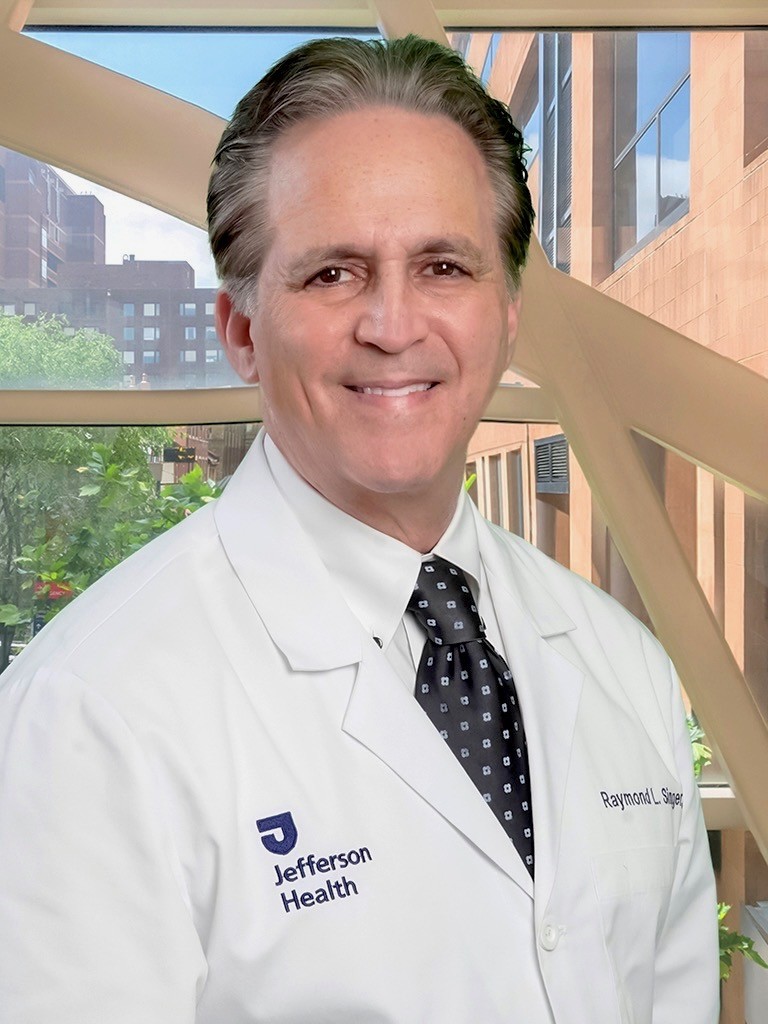
I’m Dr. Raymond Singer, and I’ll see you next time.
Interested in my book? You can buy it on Amazon!
(𝘛𝘩𝘦 𝘷𝘪𝘦𝘸𝘴 𝘦𝘹𝘱𝘳𝘦𝘴𝘴𝘦𝘥 𝘪𝘯 𝘮𝘺 𝘱𝘰𝘴𝘵𝘴 𝘢𝘳𝘦 𝘮𝘺 𝘰𝘸𝘯 𝘢𝘯𝘥 𝘥𝘰 𝘯𝘰𝘵 𝘳𝘦𝘱𝘳𝘦𝘴𝘦𝘯𝘵 𝘵𝘩𝘦 𝘷𝘪𝘦𝘸𝘴 𝘰𝘧 𝘮𝘺 𝘦𝘮𝘱𝘭𝘰𝘺𝘦𝘳 𝘰𝘳 𝘢𝘯𝘺 𝘰𝘳𝘨𝘢𝘯𝘪𝘻𝘢𝘵𝘪𝘰𝘯.)
Recent Posts
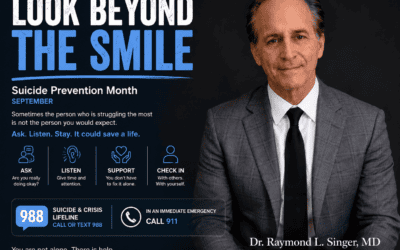
Look Beyond the Smile: How Are You Really Doing?
Sometimes the person struggling the most is not the person you would expect. They may still go to work, care for their family, answer their texts, and even make you laugh. Dr. Raymond L. Singer asks us to look beyond the smile, ask how someone is really doing, and stay long enough to hear the answer.
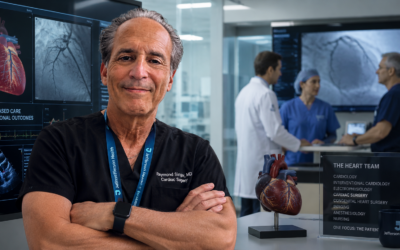
Cardiologist vs. Cardiac Surgeon: What’s the Difference?
What’s the difference between a cardiologist and a cardiac surgeon? Dr. Raymond Singer explains how cardiologists, interventional cardiologists, electrophysiologists, and cardiac surgeons work together as part of today’s modern heart team.
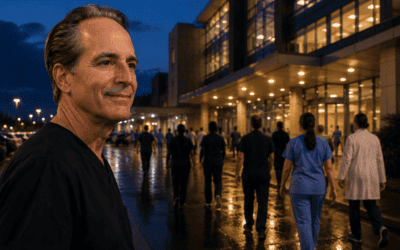
Thank You to the Night Shift
While most of the world is settling in for the evening, the hospital night shift is just beginning its workday. Dr. Raymond Singer reflects on the dedicated people who keep hospitals running around the clock and care for patients during some of the most vulnerable hours of their lives.
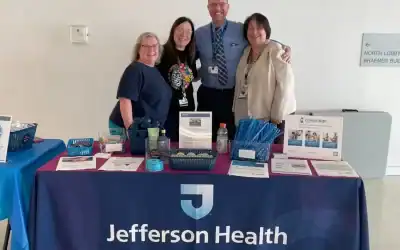
Celebrating a Remarkable Career of Caring
Dr. Raymond Singer celebrates his dear colleague and friend Marie Baker Mo, whose remarkable career has been defined by compassion, leadership, mentorship, and an unwavering commitment to caring for patients and those who care for them.

Quality and Patient Safety Must Always Come First
After years of leadership in healthcare quality and patient safety, Dr. Raymond Singer discusses two principles that can help prevent serious safety failures: ownership and communication.
The Power of Culture in Healthcare: Why Great Teams Deliver Better Care
In healthcare, metrics tell only part of the story. The culture behind a program shapes how people communicate, collaborate, hold one another accountable, and ultimately care for patients.
Featured
Pages
- Learn about heart valves. Heart Valves
- Read testimonials. Testimonials
- Did you know I have a consulting firm? Singer Heart/Lung Consulting
- Check out my TedTalk! Defining Success
Links
- Links page with more information about your heart. Links
- Dr. Adam Pick's Site: heart-valve-surgery.com