What is the difference between a cardiologist and a cardiac surgeon? It’s actually one of the more frequent questions that I get. Now, years ago, the answer was pretty simple. The cardiologist diagnosed and treated heart disease with medications and catheter-based treatments, while a cardiac surgeon performed heart operations. Well, today, it’s a little more complicated than that, and actually, it’ll turn out that that’s a really good thing, and let me explain why.
What Does a Cardiologist Do?
Let’s start with cardiologists. A general or clinical cardiologist is often the physician who diagnoses your heart condition and manages things like coronary heart disease, high blood pressure, heart failure, cholesterol problems, and valve disease.
But there are also cardiologists who specialize further. An interventional cardiologist performs procedures through catheters, usually entering through an artery or vein, to treat problems such as a blocked coronary artery with balloons and stents, for example, when a patient has a heart attack.
Today, interventional cardiologists are also deeply involved in catheter-based treatments for heart valve disease.
Now, staying with cardiologists, an electrophysiologist, or EP cardiologist, specializes in the electrical system of the heart. They treat abnormal heart rhythms and perform procedures such as ablations, and they implant pacemakers and defibrillators.
What Does a Cardiac Surgeon Do?
Okay, so now let’s talk about cardiac surgeons. Well, I’m a cardiac surgeon. We perform operations on the heart and other major blood vessels around the heart.
Well, that will include coronary artery bypass surgery, heart valve repair surgery, replacement for heart valve surgery on the aorta, and many other complex cardiac procedures.
Now, we also have colleagues who are congenital heart surgeons who specialize in defects that patients are born with, particularly infants and children, although congenital heart disease can also be treated in our adult years.
And then there are thoracic surgeons who generally specialize in diseases inside the chest outside the heart, such as lung cancer, esophageal problems, and other structures in the chest.
You may also hear the term cardiothoracic surgeon because cardiac and thoracic surgeons do train together and have the same board certification.
Where Cardiology and Cardiac Surgery Overlap
Now, here’s where things become even a little more interesting and complicated. The lines between cardiology and cardiac surgery aren’t as rigid as they once were.
Take TAVR, for example, T-A-V-R, or transcatheter aortic valve replacement. This allows us to replace an aortic valve through a catheter without traditional open heart surgery.
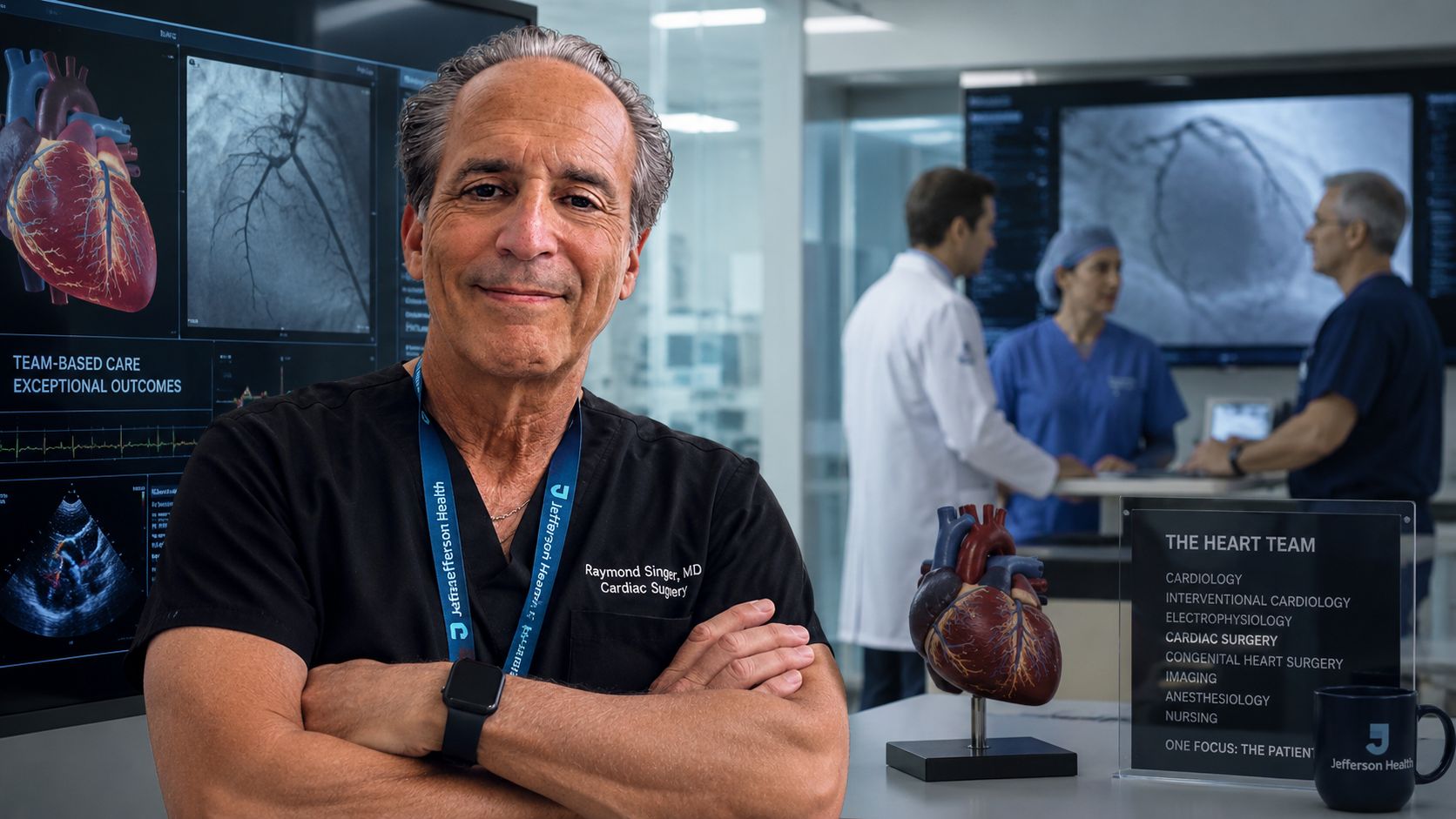
In most programs, interventional cardiologists and cardiac surgeons evaluate these patients together and work side by side as part of what we call a heart team.
The same collaborative approach can be applied to other procedures such as TEER, T-E-E-R, which is the mitral clip procedure, and other increasingly sophisticated structural heart interventions on the tricuspid valve and so on.
The Importance of the Heart Team
When you have heart disease, the question isn’t necessarily, do I need a cardiologist or a cardiac surgeon? The better question today is, do I have the right heart team?
Because sometimes medication is the best treatment, sometimes it’s catheter-based procedure, and sometimes it’s open-heart surgery that provides the best result.
And increasingly, the best answer can only come from specialists looking at the problem together and deciding what is the safest and most effective treatment for that particular patient.
That’s why I’m proud to be part of one of the largest and finest heart teams in the country, the Bruce and Robbie Toll Heart and Vascular Institute at Jefferson Health and Thomas Jefferson University here in Philadelphia. And it’s led, by the way, by the internationally known heart surgeon and my dear colleague and friend, Dr. Joseph E. Bavaria.
Modern Heart Care Is a Team Effort
You see, modern heart care isn’t about one specialty competing with another. It’s about cardiologists, interventional cardiologists, electrophysiologists, cardiac surgeons, and congenital surgeons, and many other specialties bringing their expertise together around one person, the patient.
And ultimately, that’s exactly where the focus belongs.
I’m Dr. Raymond Singer. I hope this was helpful, and I’ll see you next time.
Interested in my book? You can buy it on Amazon!
(𝘛𝘩𝘦 𝘷𝘪𝘦𝘸𝘴 𝘦𝘹𝘱𝘳𝘦𝘴𝘴𝘦𝘥 𝘪𝘯 𝘮𝘺 𝘱𝘰𝘴𝘵𝘴 𝘢𝘳𝘦 𝘮𝘺 𝘰𝘸𝘯 𝘢𝘯𝘥 𝘥𝘰 𝘯𝘰𝘵 𝘳𝘦𝘱𝘳𝘦𝘴𝘦𝘯𝘵 𝘵𝘩𝘦 𝘷𝘪𝘦𝘸𝘴 𝘰𝘧 𝘮𝘺 𝘦𝘮𝘱𝘭𝘰𝘺𝘦𝘳 𝘰𝘳 𝘢𝘯𝘺 𝘰𝘳𝘨𝘢𝘯𝘪𝘻𝘢𝘵𝘪𝘰𝘯.)
Recent Posts
Thank You to the Night Shift
While most of the world is settling in for the evening, the hospital night shift is just beginning its workday. Dr. Raymond Singer reflects on the dedicated people who keep hospitals running around the clock and care for patients during some of the most vulnerable hours of their lives.
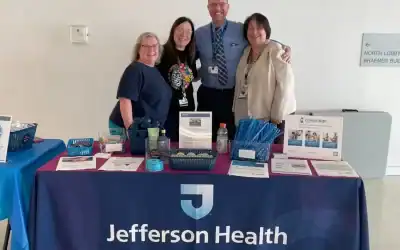
Celebrating a Remarkable Career of Caring
Dr. Raymond Singer celebrates his dear colleague and friend Marie Baker Mo, whose remarkable career has been defined by compassion, leadership, mentorship, and an unwavering commitment to caring for patients and those who care for them.
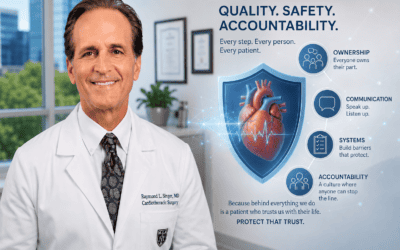
Quality and Patient Safety Must Always Come First
After years of leadership in healthcare quality and patient safety, Dr. Raymond Singer discusses two principles that can help prevent serious safety failures: ownership and communication.

The Power of Culture in Healthcare: Why Great Teams Deliver Better Care
In healthcare, metrics tell only part of the story. The culture behind a program shapes how people communicate, collaborate, hold one another accountable, and ultimately care for patients.
A Tiny Heart Tumor, a Stroke, and a Remarkable Recovery
After suffering a stroke with no clear source, Tayshia Hatcher was found to have a small tumor on her aortic valve. Surgeons removed the benign tumor, preserved her valve, and helped identify what was likely the source of her stroke. Six weeks after surgery, Tayshia reported no pain and no lasting effects from her stroke.

When Open Heart Surgery Is the Best Option
At 82 years old, Rachel Leister underwent triple valve open heart surgery after severe aortic and mitral valve stenosis caused significant shortness of breath. Six weeks later, she is pain-free, feeling great, and ready to get back to walking outdoors.
Featured
Pages
- Learn about heart valves. Heart Valves
- Read testimonials. Testimonials
- Did you know I have a consulting firm? Singer Heart/Lung Consulting
- Check out my TedTalk! Defining Success
Links
- Links page with more information about your heart. Links
- Dr. Adam Pick's Site: heart-valve-surgery.com