There is a disturbing story coming out of Tennessee that every healthcare professional and hospital administrator should pay attention to. According to reports, several patients undergoing orthopedic procedures at a Nashville hospital were harmed in a medication-related event. The family of one of the patients alleged that potassium chloride was administered into a spinal instead of the intended anesthetic, leaving the patient paralyzed. The investigation is ongoing, and I certainly don’t know all the facts.
So this isn’t about blaming an individual physician, nurse, pharmacist, or hospital. It’s really about something much bigger that I want to discuss, and that is why quality and patient safety matters.
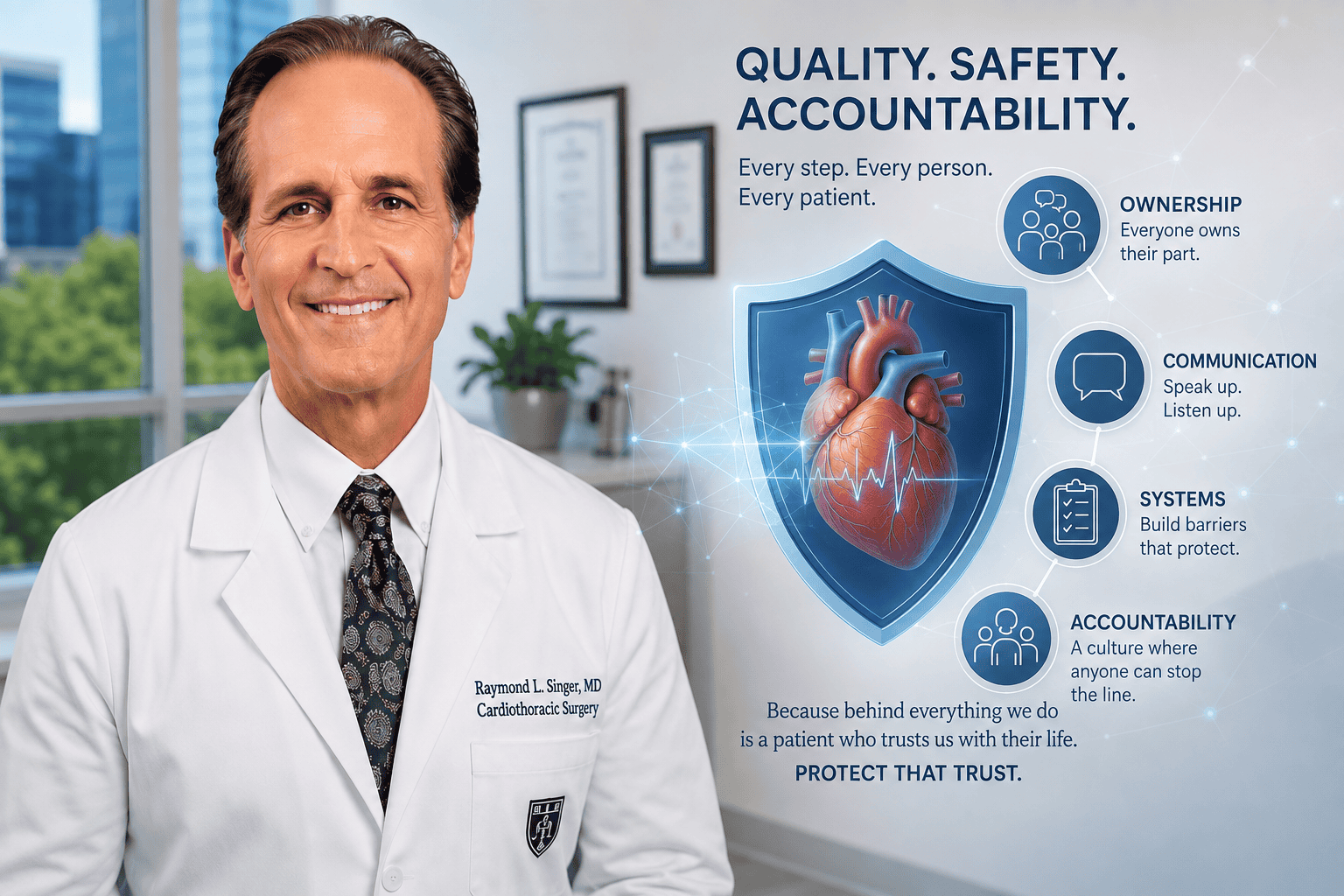
You see, after many years serving in healthcare leadership roles in quality and patient safety, I’ve come to believe that many serious safety failures ultimately involve two fundamental principles, which I refer to as ownership and communication.
Ownership
Ownership means that every person along the chain of care takes responsibility for the task entrusted to them.
So when a medication is prepared, labeled, transported, handed off, checked, and ultimately administered, every step matters. Every person in that chain has to own their piece of it.
Healthcare is complicated. We’re busy. We get interrupted. But when someone’s life literally is in our hands, we have to focus on the task in front of us, the task at hand.
Think about how an airline pilot prepares for takeoff. That pilot may have flown thousands of times, but the checklist still gets done.
Why?
Because familiarity can never replace discipline when lives are at stake.
Communication
The second principle is communication.
Medicine has learned enormously from aviation, a concept known as crew resource management. You see, in the cockpit, everyone has a responsibility to communicate clearly. If something doesn’t look right, someone needs to speak up. Information is repeated and confirmed. Ranks should never prevent a team member from raising a safety concern.
Healthcare must operate the same way.
A nurse should feel comfortable questioning a surgeon. A pharmacist should be comfortable stopping a process. A technician should be able to say, “You know, something just isn’t right here.”
And the person receiving that concern has an obligation to listen.
People sometimes say, “Human error is inevitable.” You know, I get that. We’re all human. But I never have been comfortable accepting that statement as the endpoint of a patient safety discussion.
Building Systems That Protect Patients
Our responsibility is to build systems that anticipate human error and prevent it from reaching the patient.
Such things as barcoding, standardized labeling, independent verification, medication segregation, checklists, readbacks, timeouts, closed-loop communications.
These aren’t bureaucracy.
They’re barriers between a mistake and a patient.
In quality, we often talk about never events. Those are catastrophic occurrences that should simply never happen.
A Culture of Accountability
The goal isn’t to create a culture of blame. It’s to create a culture of accountability, a culture where everyone takes ownership, a culture where everyone communicates, and a culture where anyone, regardless of title, can stop the line when something doesn’t seem right.
Because behind every medication, behind every procedure, every checklist, every handoff is something we can never afford to forget.
There is a patient trusting us with their life.
And protecting that trust is the most important responsibility we have.
I’m Dr. Raymond Singer. I hope this was helpful. Stay safe and I’ll see you next time.
ᴅɪꜱᴄʟᴀɪᴍᴇʀ: ᴛʜɪꜱ ᴠɪᴅᴇᴏ ᴅɪꜱᴄᴜꜱꜱᴇꜱ ᴘᴜʙʟɪᴄʟʏ ʀᴇᴘᴏʀᴛᴇᴅ ᴀʟʟᴇɢᴀᴛɪᴏɴꜱ ᴀɴᴅ ɪꜱ ɪɴᴛᴇɴᴅᴇᴅ ꜱᴏʟᴇʟʏ ꜰᴏʀ ɢᴇɴᴇʀᴀʟ ᴇᴅᴜᴄᴀᴛɪᴏɴ ᴀɴᴅ ᴅɪꜱᴄᴜꜱꜱɪᴏɴ ᴏꜰ ʜᴇᴀʟᴛʜᴄᴀʀᴇ Qᴜᴀʟɪᴛʏ ᴀɴᴅ ᴘᴀᴛɪᴇɴᴛ ꜱᴀꜰᴇᴛʏ. ɪ ʜᴀᴠᴇ ɴᴏ ꜰɪʀꜱᴛʜᴀɴᴅ ᴋɴᴏᴡʟᴇᴅɢᴇ ᴏꜰ ᴛʜᴇ ɪɴᴄɪᴅᴇɴᴛ, ᴀɴᴅ ɴᴏ ᴄᴏɴᴄʟᴜꜱɪᴏɴꜱ ꜱʜᴏᴜʟᴅ ʙᴇ ᴅʀᴀᴡɴ ʀᴇɢᴀʀᴅɪɴɢ ᴛʜᴇ ᴀᴄᴛɪᴏɴꜱ ᴏʀ ʀᴇꜱᴘᴏɴꜱɪʙɪʟɪᴛʏ ᴏꜰ ᴀɴʏ ɪɴᴅɪᴠɪᴅᴜᴀʟ ᴏʀ ᴏʀɢᴀɴɪᴢᴀᴛɪᴏɴ ᴡʜɪʟᴇ ᴛʜᴇ ᴍᴀᴛᴛᴇʀ ʀᴇᴍᴀɪɴꜱ ᴜɴᴅᴇʀ ɪɴᴠᴇꜱᴛɪɢᴀᴛɪᴏɴ. ᴛʜᴇ ᴠɪᴇᴡꜱ ᴇxᴘʀᴇꜱꜱᴇᴅ ᴀʀᴇ ᴍʏ ᴏᴡɴ ᴀɴᴅ ᴅᴏ ɴᴏᴛ ʀᴇᴘʀᴇꜱᴇɴᴛ ᴍʏ ᴇᴍᴘʟᴏʏᴇʀ ᴏʀ ᴀɴʏ ᴀꜰꜰɪʟɪᴀᴛᴇᴅ ᴏʀɢᴀɴɪᴢᴀᴛɪᴏɴ.
Interested in my book? You can buy it on Amazon!
(𝘛𝘩𝘦 𝘷𝘪𝘦𝘸𝘴 𝘦𝘹𝘱𝘳𝘦𝘴𝘴𝘦𝘥 𝘪𝘯 𝘮𝘺 𝘱𝘰𝘴𝘵𝘴 𝘢𝘳𝘦 𝘮𝘺 𝘰𝘸𝘯 𝘢𝘯𝘥 𝘥𝘰 𝘯𝘰𝘵 𝘳𝘦𝘱𝘳𝘦𝘴𝘦𝘯𝘵 𝘵𝘩𝘦 𝘷𝘪𝘦𝘸𝘴 𝘰𝘧 𝘮𝘺 𝘦𝘮𝘱𝘭𝘰𝘺𝘦𝘳 𝘰𝘳 𝘢𝘯𝘺 𝘰𝘳𝘨𝘢𝘯𝘪𝘻𝘢𝘵𝘪𝘰𝘯.)
Recent Posts

Should We Be Afraid of AI?
Should we be afraid of AI? Dr. Scott Silverstein, a pioneer in medical informatics, shares why human judgment, experience, and responsible innovation matter more than ever.

Extraordinary Care Around the Clock
While most of us are sleeping, the cardiac surgery night crew at Jefferson Einstein Montgomery Hospital is working tirelessly to keep patients safe, supported, and cared for. Their dedication, compassion, and teamwork make extraordinary care possible around the clock.

Not Every Patient With Aortic Stenosis Is Best Served by the Least Invasive Approach
Not every patient with aortic stenosis is best served by the least invasive approach. For this 68-year-old patient, severe aortic stenosis and critical coronary artery disease made surgical valve replacement and CABG the right choice.

When the Right Heart Valve Changes: A Fourth Operation After 14 Years
A patient’s remarkable valve history led to a fourth open-heart operation, not because her mechanical valve failed, but because her medical circumstances changed.

Sleep Apnea and Your Heart: Why Your Sleep Matters
Sleep apnea isn’t just about snoring or feeling tired. Untreated sleep apnea can put stress on the cardiovascular system, making sleep an important part of taking care of your heart.

Congratulations to Anastasia Arce, PA-C, on the APC Excellence Award
Congratulations to Anastasia Arce, PA-C, on receiving the Jefferson Health APC Excellence Award. Anastasia is an invaluable member of our Cardiac Surgery team, and this recognition is so well deserved.
Featured
Pages
- Learn about heart valves. Heart Valves
- Read testimonials. Testimonials
- Did you know I have a consulting firm? Singer Heart/Lung Consulting
- Check out my TedTalk! Defining Success
Links
- Links page with more information about your heart. Links
- Dr. Adam Pick's Site: heart-valve-surgery.com