Let’s talk about sleep apnea.
Have you ever been told that you snore loudly, stop breathing during sleep, or wake up feeling exhausted the next day? If so, you may have obstructive sleep apnea, a common condition that can have a major impact on both your heart and overall health.
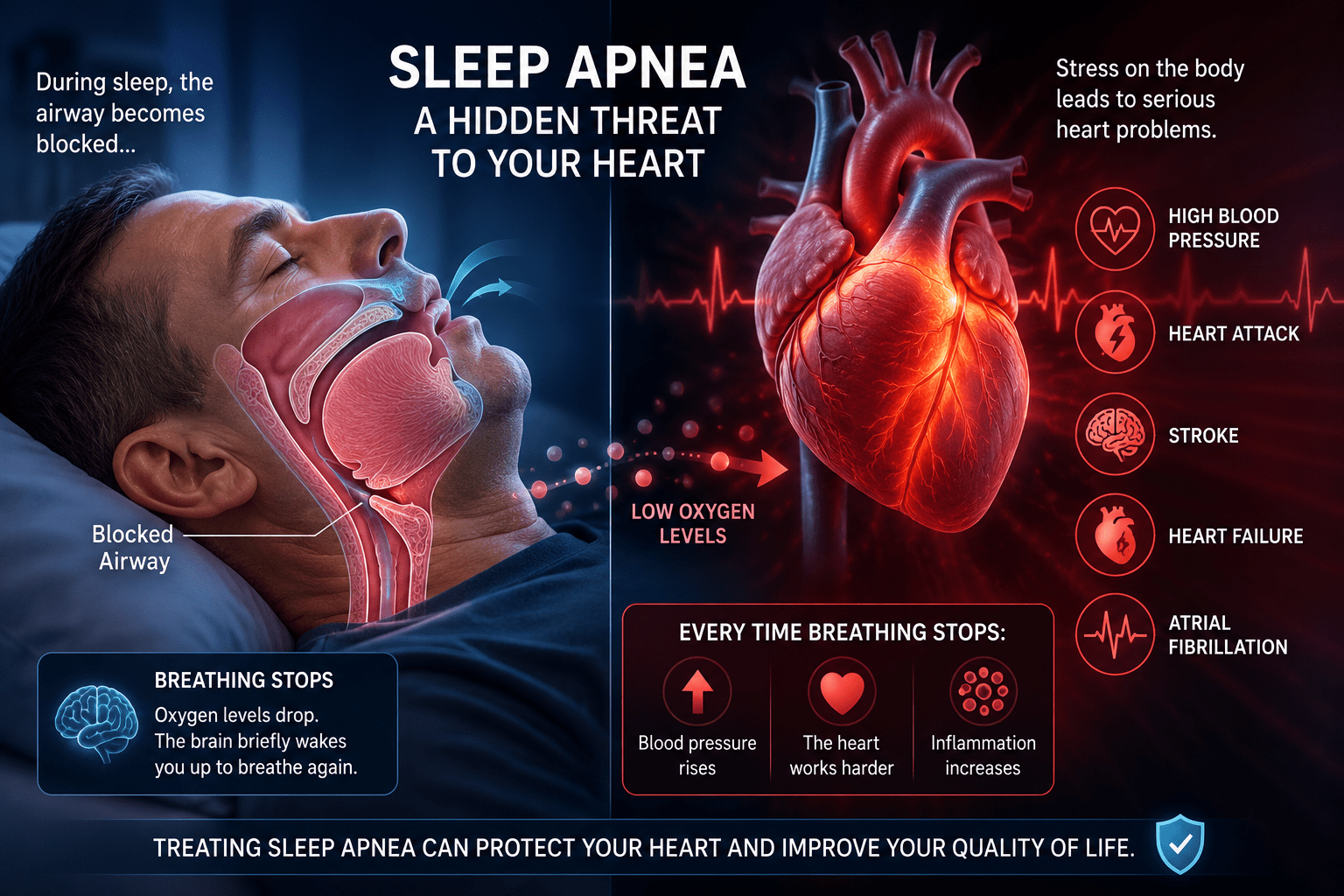
Obstructive sleep apnea occurs when the muscles in the back of the throat relax during sleep, causing the airway to become partially or completely blocked. When this happens, oxygen levels drop, and the brain briefly wakes the body so breathing can resume.
This cycle can occur dozens or even hundreds of times each night, often without the person realizing it.
Many people think sleep apnea is simply a nuisance because of the snoring, but it is actually a serious medical condition. Repeated drops in oxygen place tremendous stress on the cardiovascular system.
Every time breathing stops, the body releases stress hormones such as adrenaline. Blood pressure rises, the heart works harder, and inflammation increases throughout the body.
Over time, untreated sleep apnea can contribute to:
- High blood pressure
- Heart attacks
- Stroke
- Heart failure
- Abnormal heart rhythms such as atrial fibrillation
In fact, sleep apnea is one of the most common underlying conditions seen in patients with atrial fibrillation. Patients who undergo treatment for AFib often experience better outcomes when their sleep apnea is identified and treated as well.
Sleep apnea can also worsen coronary artery disease and increase the risk of sudden cardiac death. The combination of low oxygen levels, inflammation, and elevated blood pressure creates a perfect storm for cardiovascular disease.
Common symptoms of sleep apnea include:
- Loud snoring
- Witnessed pauses in breathing
- Gasping during sleep
- Excessive daytime fatigue
- Morning headaches
- Poor concentration
- Memory problems
- Difficulty controlling blood pressure
However, some people may have very few symptoms and remain unaware that they have the condition.
The good news is that sleep apnea is highly treatable.
Weight loss can be extremely effective for some individuals. Other treatment options include:
- CPAP therapy
- Oral appliances
- Positional therapy
- Surgical procedures in select cases
Newer weight loss medications may also help reduce the severity of sleep apnea in some patients.
If you snore heavily, feel excessively tired during the day, or have heart disease, consider discussing sleep apnea with your physician. A simple sleep study can often provide answers.
As heart surgeons and cardiologists, we spend a great deal of time treating the consequences of cardiovascular disease. Sometimes one of the most important things we can do is identify and treat an underlying cause.
Sleep apnea may occur while you’re sleeping, but its effects can follow you throughout the day and throughout your life.
I’m Dr. Raymond Singer.
I hope this was helpful, and I’ll see you next time.
Interested in my book? You can buy it on Amazon!
(𝘛𝘩𝘦 𝘷𝘪𝘦𝘸𝘴 𝘦𝘹𝘱𝘳𝘦𝘴𝘴𝘦𝘥 𝘪𝘯 𝘮𝘺 𝘱𝘰𝘴𝘵𝘴 𝘢𝘳𝘦 𝘮𝘺 𝘰𝘸𝘯 𝘢𝘯𝘥 𝘥𝘰 𝘯𝘰𝘵 𝘳𝘦𝘱𝘳𝘦𝘴𝘦𝘯𝘵 𝘵𝘩𝘦 𝘷𝘪𝘦𝘸𝘴 𝘰𝘧 𝘮𝘺 𝘦𝘮𝘱𝘭𝘰𝘺𝘦𝘳 𝘰𝘳 𝘢𝘯𝘺 𝘰𝘳𝘨𝘢𝘯𝘪𝘻𝘢𝘵𝘪𝘰𝘯.)
Recent Posts
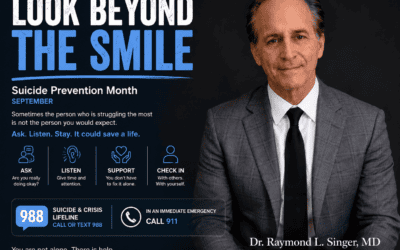
Look Beyond the Smile: How Are You Really Doing?
Sometimes the person struggling the most is not the person you would expect. They may still go to work, care for their family, answer their texts, and even make you laugh. Dr. Raymond L. Singer asks us to look beyond the smile, ask how someone is really doing, and stay long enough to hear the answer.
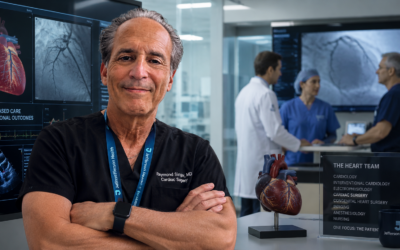
Cardiologist vs. Cardiac Surgeon: What’s the Difference?
What’s the difference between a cardiologist and a cardiac surgeon? Dr. Raymond Singer explains how cardiologists, interventional cardiologists, electrophysiologists, and cardiac surgeons work together as part of today’s modern heart team.

Thank You to the Night Shift
While most of the world is settling in for the evening, the hospital night shift is just beginning its workday. Dr. Raymond Singer reflects on the dedicated people who keep hospitals running around the clock and care for patients during some of the most vulnerable hours of their lives.

Celebrating a Remarkable Career of Caring
Dr. Raymond Singer celebrates his dear colleague and friend Marie Baker Mo, whose remarkable career has been defined by compassion, leadership, mentorship, and an unwavering commitment to caring for patients and those who care for them.
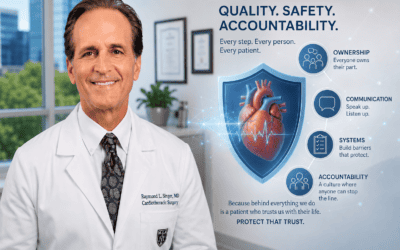
Quality and Patient Safety Must Always Come First
After years of leadership in healthcare quality and patient safety, Dr. Raymond Singer discusses two principles that can help prevent serious safety failures: ownership and communication.

The Power of Culture in Healthcare: Why Great Teams Deliver Better Care
In healthcare, metrics tell only part of the story. The culture behind a program shapes how people communicate, collaborate, hold one another accountable, and ultimately care for patients.
Featured
Pages
- Learn about heart valves. Heart Valves
- Read testimonials. Testimonials
- Did you know I have a consulting firm? Singer Heart/Lung Consulting
- Check out my TedTalk! Defining Success
Links
- Links page with more information about your heart. Links
- Dr. Adam Pick's Site: heart-valve-surgery.com