Tayshia Hatcher: My name is Tayshia Hatcher.
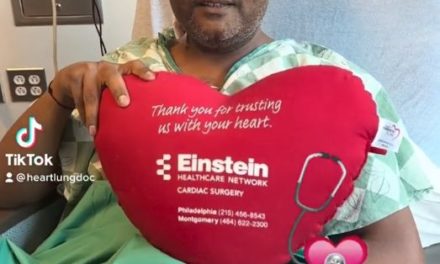
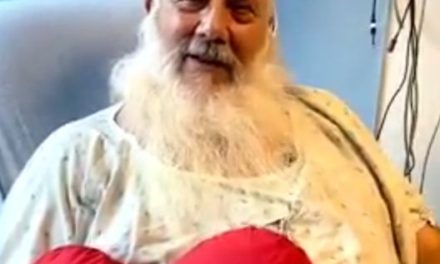
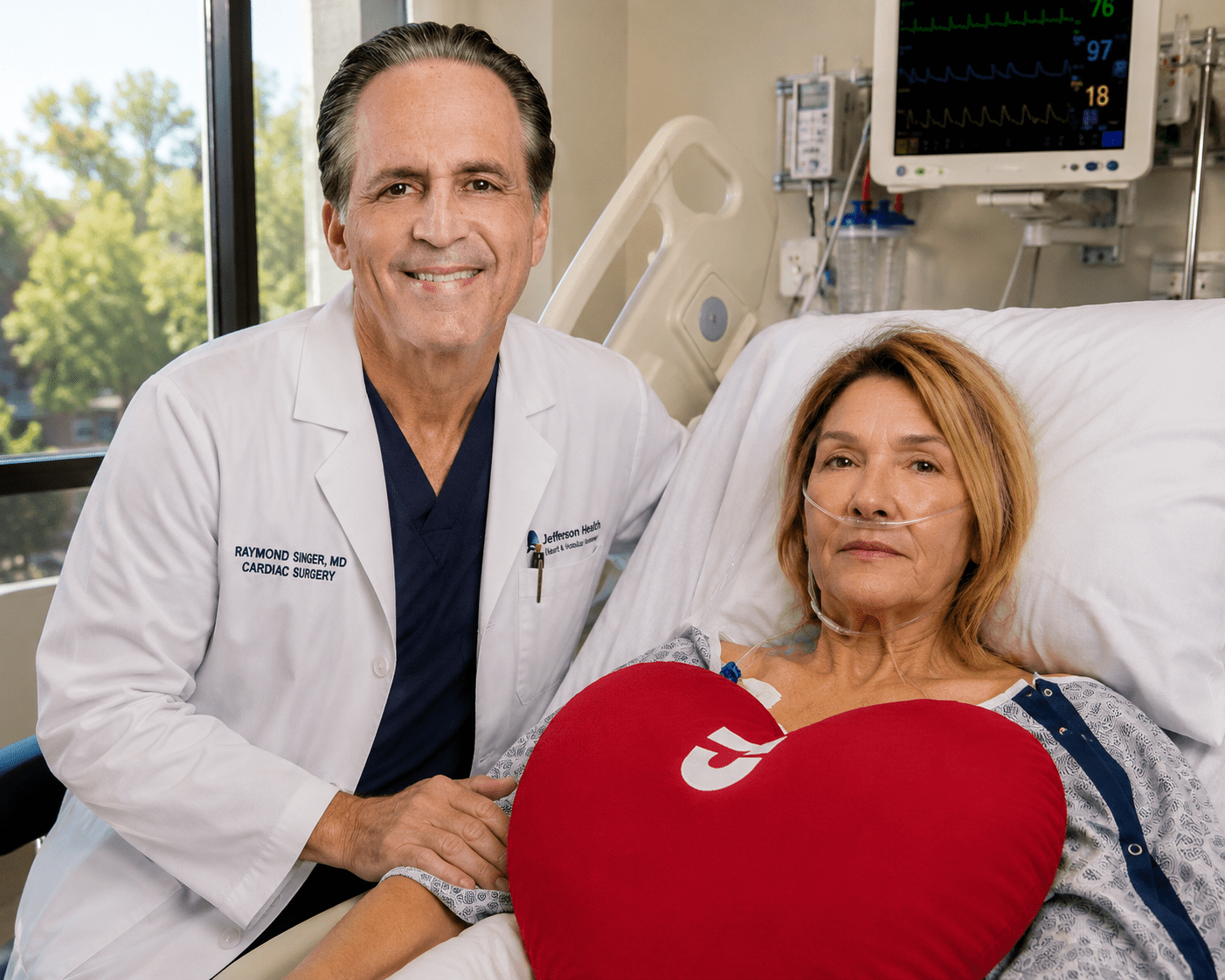
Dr. Singer: Thank you for allowing us to share your story for educational purposes. You’re 69 years old, and you underwent open heart surgery just a few hours ago. Can you tell us what led to today’s operation?
Tayshia: In November 2025, I suffered a stroke. At first, doctors weren’t sure what caused it. Later, an echocardiogram revealed several small growths on my aortic valve. The concern was that one or more of those growths had broken loose and traveled to my brain, causing the stroke.
Dr. Singer: When we reviewed your case together, we agreed that those growths placed you at significant risk for another stroke. During surgery today, we removed four to five of these benign growths from your aortic valve and were able to repair your native valve without needing a valve replacement.
How are you feeling now?
Tayshia: Honestly, I feel great. It’s only about eight hours after surgery, and I have absolutely no pain while resting. I expected it to be much worse than it was.
Dr. Singer: Many people believe a traditional sternotomy always results in severe pain, but modern surgical techniques have changed that experience for many patients. Your incision is also quite small and positioned low on the chest, making it much less noticeable after healing.
Tayshia: I was surprised by how comfortable I’ve been. The entire experience has been much easier than I imagined.
Dr. Singer: The surgery went exactly as we hoped. We successfully removed the valve growths while preserving your own aortic valve. Because of that, we expect a smooth recovery, and you should be able to return home within just a few days.
How has your experience been at Jefferson Einstein Montgomery Hospital?
Tayshia: The care has been outstanding. Everyone has been professional, knowledgeable, compassionate, and incredibly supportive. I truly couldn’t ask for better care.
Dr. Singer: Tomorrow we’ll remove your chest drain, get you sitting up, and have you walking the halls. You’re an excellent example of how patients can undergo traditional open heart surgery, avoid another potentially devastating stroke, and recover comfortably with modern surgical techniques. Thank you for sharing your experience.
Tayshia: Thank you.
Interested in my book? You can buy it on Amazon!
(𝘛𝘩𝘦 𝘷𝘪𝘦𝘸𝘴 𝘦𝘹𝘱𝘳𝘦𝘴𝘴𝘦𝘥 𝘪𝘯 𝘮𝘺 𝘱𝘰𝘴𝘵𝘴 𝘢𝘳𝘦 𝘮𝘺 𝘰𝘸𝘯 𝘢𝘯𝘥 𝘥𝘰 𝘯𝘰𝘵 𝘳𝘦𝘱𝘳𝘦𝘴𝘦𝘯𝘵 𝘵𝘩𝘦 𝘷𝘪𝘦𝘸𝘴 𝘰𝘧 𝘮𝘺 𝘦𝘮𝘱𝘭𝘰𝘺𝘦𝘳 𝘰𝘳 𝘢𝘯𝘺 𝘰𝘳𝘨𝘢𝘯𝘪𝘻𝘢𝘵𝘪𝘰𝘯.)
Recent Posts
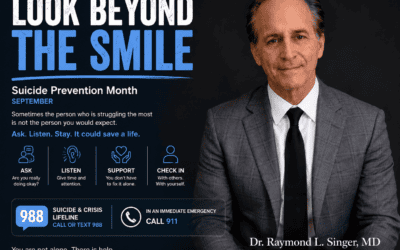
Look Beyond the Smile: How Are You Really Doing?
Sometimes the person struggling the most is not the person you would expect. They may still go to work, care for their family, answer their texts, and even make you laugh. Dr. Raymond L. Singer asks us to look beyond the smile, ask how someone is really doing, and stay long enough to hear the answer.
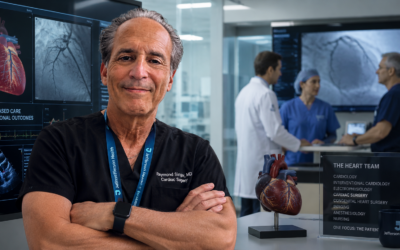
Cardiologist vs. Cardiac Surgeon: What’s the Difference?
What’s the difference between a cardiologist and a cardiac surgeon? Dr. Raymond Singer explains how cardiologists, interventional cardiologists, electrophysiologists, and cardiac surgeons work together as part of today’s modern heart team.

Thank You to the Night Shift
While most of the world is settling in for the evening, the hospital night shift is just beginning its workday. Dr. Raymond Singer reflects on the dedicated people who keep hospitals running around the clock and care for patients during some of the most vulnerable hours of their lives.
Celebrating a Remarkable Career of Caring
Dr. Raymond Singer celebrates his dear colleague and friend Marie Baker Mo, whose remarkable career has been defined by compassion, leadership, mentorship, and an unwavering commitment to caring for patients and those who care for them.
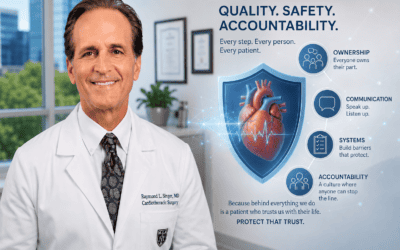
Quality and Patient Safety Must Always Come First
After years of leadership in healthcare quality and patient safety, Dr. Raymond Singer discusses two principles that can help prevent serious safety failures: ownership and communication.
The Power of Culture in Healthcare: Why Great Teams Deliver Better Care
In healthcare, metrics tell only part of the story. The culture behind a program shapes how people communicate, collaborate, hold one another accountable, and ultimately care for patients.
Featured
Pages
- Learn about heart valves. Heart Valves
- Read testimonials. Testimonials
- Did you know I have a consulting firm? Singer Heart/Lung Consulting
- Check out my TedTalk! Defining Success
Links
- Links page with more information about your heart. Links
- Dr. Adam Pick's Site: heart-valve-surgery.com