And the honest answer is this: the best time to exercise is the time you will consistently do it.
That said, there are some differences depending on the time of day.
Morning exercise can be excellent because it helps establish a routine. People who work out in the morning often stay more consistent over time. Morning activity can also improve energy, mood, metabolism, and even sleep patterns by helping regulate the body’s natural internal clock.
Even something as simple as a brisk morning walk can provide tremendous cardiovascular benefits.
On the other hand, many people actually perform better physically later in the day, especially in the afternoon or early evening. During those hours, muscles are warmer, flexibility tends to improve, and strength and endurance often peak.
So if you enjoy weight training, cycling, running, or more intense exercise, you may feel stronger and perform better later in the day.
What I generally tell patients is this: don’t become so focused on finding the perfect time to exercise that you miss the bigger picture.
The real key to heart health is consistency.
Thirty minutes of exercise done regularly is far more important than trying to optimize the exact hour of the day.
And here’s one simple but very important habit I strongly encourage: take a short walk after meals, especially after dinner. Even 10 to 15 minutes of walking can help improve blood sugar control, digestion, circulation, and overall cardiovascular health.
Exercise does not need to be extreme to be effective. Walking, stretching, light weights, cycling, and swimming all matter.
The goal is movement, consistency, and creating habits you can maintain for years, not just weeks.
Your heart does not care whether you exercise at 6 a.m. or 6 p.m. What your heart does care about is that you move, stay active, and continue investing in your health every single day.
Interested in my book? You can buy it on Amazon!
(𝘛𝘩𝘦 𝘷𝘪𝘦𝘸𝘴 𝘦𝘹𝘱𝘳𝘦𝘴𝘴𝘦𝘥 𝘪𝘯 𝘮𝘺 𝘱𝘰𝘴𝘵𝘴 𝘢𝘳𝘦 𝘮𝘺 𝘰𝘸𝘯 𝘢𝘯𝘥 𝘥𝘰 𝘯𝘰𝘵 𝘳𝘦𝘱𝘳𝘦𝘴𝘦𝘯𝘵 𝘵𝘩𝘦 𝘷𝘪𝘦𝘸𝘴 𝘰𝘧 𝘮𝘺 𝘦𝘮𝘱𝘭𝘰𝘺𝘦𝘳 𝘰𝘳 𝘢𝘯𝘺 𝘰𝘳𝘨𝘢𝘯𝘪𝘻𝘢𝘵𝘪𝘰𝘯.)
Recent Posts

The Power of Culture in Healthcare: Why Great Teams Deliver Better Care
In healthcare, metrics tell only part of the story. The culture behind a program shapes how people communicate, collaborate, hold one another accountable, and ultimately care for patients.

A Tiny Heart Tumor, a Stroke, and a Remarkable Recovery
After suffering a stroke with no clear source, Tayshia Hatcher was found to have a small tumor on her aortic valve. Surgeons removed the benign tumor, preserved her valve, and helped identify what was likely the source of her stroke. Six weeks after surgery, Tayshia reported no pain and no lasting effects from her stroke.

When Open Heart Surgery Is the Best Option
At 82 years old, Rachel Leister underwent triple valve open heart surgery after severe aortic and mitral valve stenosis caused significant shortness of breath. Six weeks later, she is pain-free, feeling great, and ready to get back to walking outdoors.

Your Heart Was Made to Move
What is the best exercise for your heart? There isn’t just one answer. Dr. Raymond Singer explains how aerobic exercise, strength training, flexibility, balance, and simple daily movement can all support cardiovascular health.

Can Sleep Affect Your Waistline?
We often think about diet and exercise when we talk about maintaining a healthy weight. But there may be a third piece of the puzzle: sleep. Dr. Raymond Singer explores how insufficient sleep can affect hunger, metabolism, cravings, abdominal fat, and cardiovascular health.
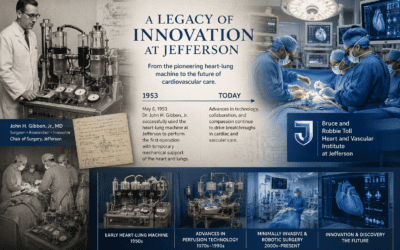
The Heart-Lung Machine: A Jefferson Legacy That Changed Medicine
More than 70 years ago, Jefferson surgeon and researcher John H. Gibbon Jr. helped make what once seemed impossible a reality: temporarily replacing the functions of the heart and lungs with a machine so surgeons could operate on a stopped heart.
Featured
Pages
- Learn about heart valves. Heart Valves
- Read testimonials. Testimonials
- Did you know I have a consulting firm? Singer Heart/Lung Consulting
- Check out my TedTalk! Defining Success
Links
- Links page with more information about your heart. Links
- Dr. Adam Pick's Site: heart-valve-surgery.com