Let’s talk about statins, one of the most important and sometimes controversial medications used in cardiovascular medicine.
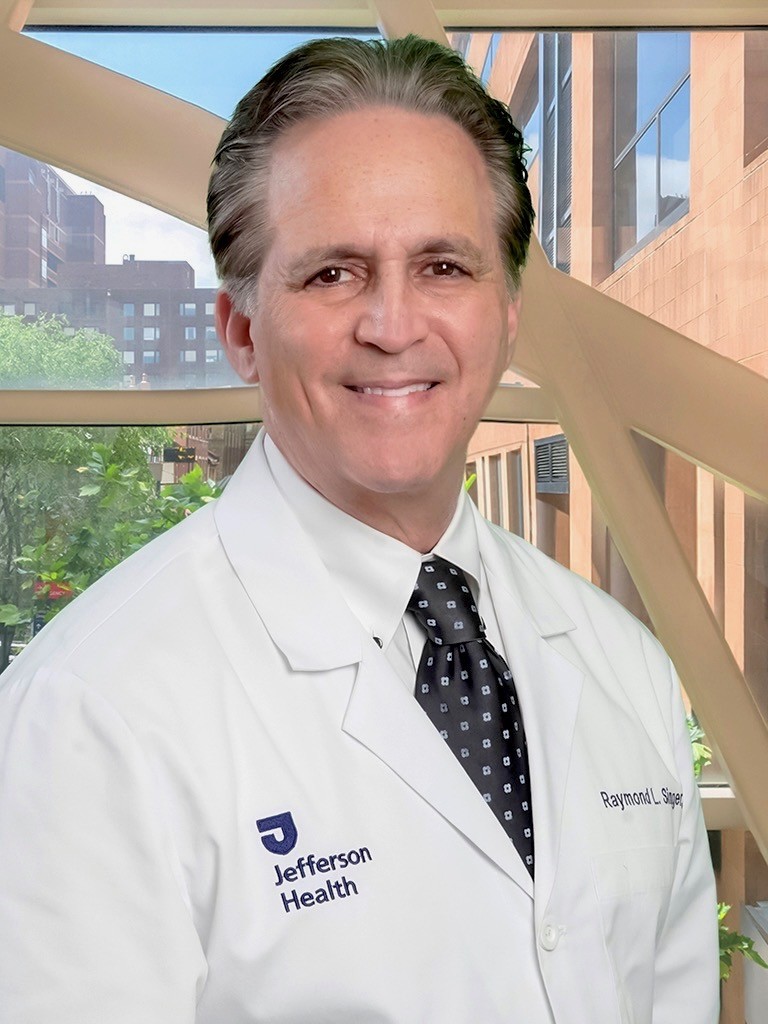
People are often surprised when I tell them that I take a statin myself. As a heart surgeon, I’ve spent my career operating on patients with severe coronary artery disease, heart attacks, and blocked arteries. One thing I learned very early is that heart disease does not always look the way people expect it to look.
When I was just 44 years old, I was found to have calcification in my coronary arteries, even though I did not fit the typical stereotype. I never smoked, I stayed active, maintained a healthy weight, and did not have a dramatic family history of coronary artery disease. On the surface, I appeared to be low risk.
But after decades in medicine, I also understood that genetics can be hidden, inflammation plays a major role, and chronic stress has become an increasingly important factor in cardiovascular disease.
Sadly, for some people, the first symptom of heart disease is a heart attack or even sudden death.
So I saw a cardiologist, underwent a stress test, and was advised to start a statin. Like many patients, I wanted to understand the science and safety behind taking a medication long term before making that decision myself.
What I found convinced me that for the right patients, statins are not only highly effective, but remarkably safe. And I still feel that way today.
One concern I hear frequently is the fear that statins cause Alzheimer’s disease or memory loss. Fortunately, the scientific evidence does not support that concern. Large studies have not shown an increased risk of dementia or Alzheimer’s disease from statin use.
In fact, some research suggests the opposite may be true. By improving vascular health and reducing the risk of stroke, statins may actually help protect cognitive function in many patients.
A small number of people do report temporary brain fog or confusion while taking statins, but these cases are uncommon and are typically reversible by stopping or changing the medication.
Overall, for appropriate patients, the cardiovascular benefits of statins far outweigh the largely unproven fears surrounding dementia.
Statins work by lowering LDL cholesterol, stabilizing plaque, and reducing inflammation inside the arteries. That reduction in inflammation is extremely important.
These medications do more than improve cholesterol numbers on a lab test. They reduce the risk of heart attacks, strokes, bypass surgery, and death from cardiovascular disease.
For me personally, it has now been about 24 years since I started taking a statin. I’m now 68 years old, and I genuinely believe it has been one of the key factors in helping me stay healthy.
Are statins perfect? No medication is. Some patients experience muscle aches or other side effects, and treatment always needs to be individualized.
But in my experience, much of the fear surrounding statins, especially on social media, is far greater than the actual risk for most patients.
As heart surgeons, we see the consequences of uncontrolled cardiovascular disease every day. We also see patients who wish they had acted earlier.
That’s why, when appropriate, I strongly recommend statins to many of my patients who are at risk for cardiovascular disease. Not simply because I’ve read the studies or guidelines, but because I’ve seen the outcomes firsthand, both professionally and personally.
Interested in my book? You can buy it on Amazon!
(𝘛𝘩𝘦 𝘷𝘪𝘦𝘸𝘴 𝘦𝘹𝘱𝘳𝘦𝘴𝘴𝘦𝘥 𝘪𝘯 𝘮𝘺 𝘱𝘰𝘴𝘵𝘴 𝘢𝘳𝘦 𝘮𝘺 𝘰𝘸𝘯 𝘢𝘯𝘥 𝘥𝘰 𝘯𝘰𝘵 𝘳𝘦𝘱𝘳𝘦𝘴𝘦𝘯𝘵 𝘵𝘩𝘦 𝘷𝘪𝘦𝘸𝘴 𝘰𝘧 𝘮𝘺 𝘦𝘮𝘱𝘭𝘰𝘺𝘦𝘳 𝘰𝘳 𝘢𝘯𝘺 𝘰𝘳𝘨𝘢𝘯𝘪𝘻𝘢𝘵𝘪𝘰𝘯.)
Recent Posts
The Power of Culture in Healthcare: Why Great Teams Deliver Better Care
In healthcare, metrics tell only part of the story. The culture behind a program shapes how people communicate, collaborate, hold one another accountable, and ultimately care for patients.
A Tiny Heart Tumor, a Stroke, and a Remarkable Recovery
After suffering a stroke with no clear source, Tayshia Hatcher was found to have a small tumor on her aortic valve. Surgeons removed the benign tumor, preserved her valve, and helped identify what was likely the source of her stroke. Six weeks after surgery, Tayshia reported no pain and no lasting effects from her stroke.
When Open Heart Surgery Is the Best Option
At 82 years old, Rachel Leister underwent triple valve open heart surgery after severe aortic and mitral valve stenosis caused significant shortness of breath. Six weeks later, she is pain-free, feeling great, and ready to get back to walking outdoors.
Your Heart Was Made to Move
What is the best exercise for your heart? There isn’t just one answer. Dr. Raymond Singer explains how aerobic exercise, strength training, flexibility, balance, and simple daily movement can all support cardiovascular health.
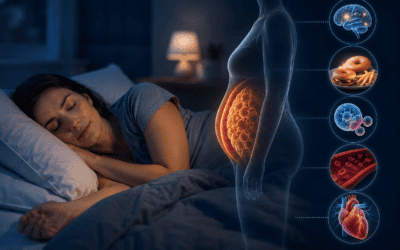
Can Sleep Affect Your Waistline?
We often think about diet and exercise when we talk about maintaining a healthy weight. But there may be a third piece of the puzzle: sleep. Dr. Raymond Singer explores how insufficient sleep can affect hunger, metabolism, cravings, abdominal fat, and cardiovascular health.
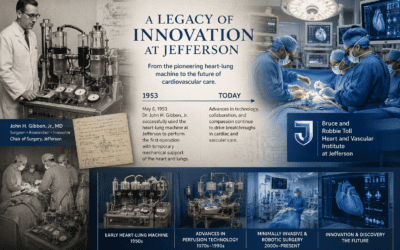
The Heart-Lung Machine: A Jefferson Legacy That Changed Medicine
More than 70 years ago, Jefferson surgeon and researcher John H. Gibbon Jr. helped make what once seemed impossible a reality: temporarily replacing the functions of the heart and lungs with a machine so surgeons could operate on a stopped heart.
Featured
Pages
- Learn about heart valves. Heart Valves
- Read testimonials. Testimonials
- Did you know I have a consulting firm? Singer Heart/Lung Consulting
- Check out my TedTalk! Defining Success
Links
- Links page with more information about your heart. Links
- Dr. Adam Pick's Site: heart-valve-surgery.com