I’d like to provide an important update regarding the apparent cause of death of Senator Lindsey Graham.
Earlier today, I posted a video discussing several possible medical explanations for his sudden death. Since Senator Graham had recently traveled internationally, we used that opportunity to educate viewers about deep vein thrombosis (DVT) and pulmonary embolism, including ways to reduce the risk during long trips.
Since then, however, the medical examiner has released a preliminary report indicating that the cause of death was not a pulmonary embolism or a heart attack. Instead, the preliminary findings suggest he suffered an acute aortic dissection.
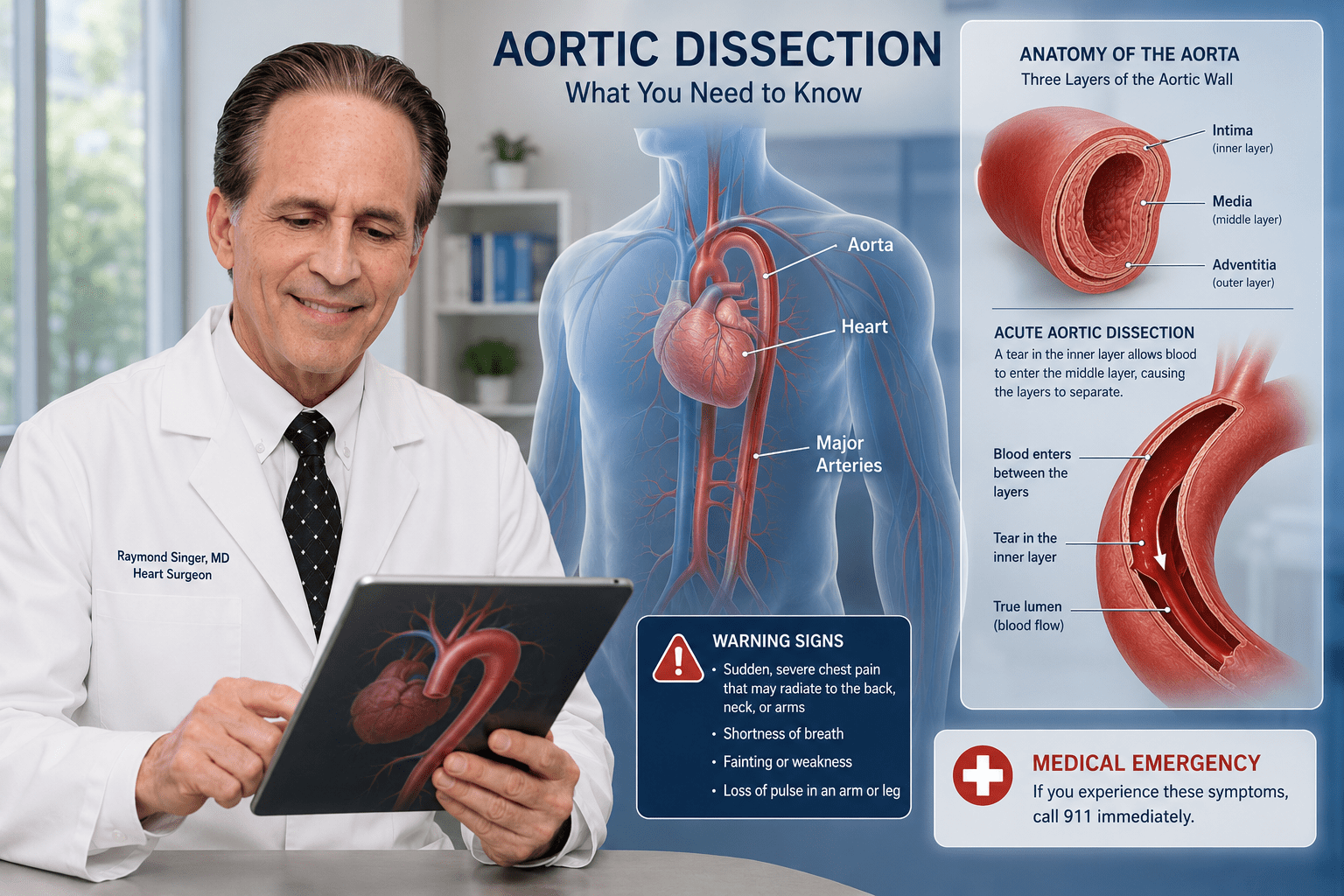
What Is an Aortic Dissection?
The aorta is the largest artery in the body. Its wall consists of three layers:
- The intima (inner layer)
- The media (middle layer)
- The adventitia (outer layer)
An aortic dissection occurs when the inner layer tears, allowing blood to force its way between the layers of the artery wall. As the blood separates these layers, the tear can extend along the aorta and interfere with blood flow to vital organs.
Why Is It So Dangerous?
As the dissection progresses, it may block blood flow to the:
- Brain
- Spinal cord
- Kidneys and other organs
- Heart
In severe cases, the aorta can rupture, causing catastrophic internal bleeding and sudden death.
High blood pressure is one of the most common risk factors, although connective tissue disorders and other conditions can also contribute.
Warning Signs
Many patients with a Type A aortic dissection experience:
- Sudden, severe chest pain
- Pain that radiates to the back
- Pain that may spread to the neck or arm
Symptoms can vary from person to person, but any sudden, severe chest pain should be treated as a medical emergency.
If someone develops these symptoms, call 911 immediately and seek emergency medical care without delay.
Early Treatment Saves Lives
Although today’s discussion about preventing blood clots during travel remains important, the preliminary findings indicate that Senator Graham’s death appears to have resulted from an acute aortic dissection, similar to the condition that claimed the life of actor John Ritter.
The encouraging news is that when patients with an aortic dissection reach the hospital before the condition becomes catastrophic, cardiac surgeons can often successfully repair the damage.
As always, my thoughts and prayers remain with Senator Graham’s family, friends, and colleagues during this difficult time.
Interested in my book? You can buy it on Amazon!
(𝘛𝘩𝘦 𝘷𝘪𝘦𝘸𝘴 𝘦𝘹𝘱𝘳𝘦𝘴𝘴𝘦𝘥 𝘪𝘯 𝘮𝘺 𝘱𝘰𝘴𝘵𝘴 𝘢𝘳𝘦 𝘮𝘺 𝘰𝘸𝘯 𝘢𝘯𝘥 𝘥𝘰 𝘯𝘰𝘵 𝘳𝘦𝘱𝘳𝘦𝘴𝘦𝘯𝘵 𝘵𝘩𝘦 𝘷𝘪𝘦𝘸𝘴 𝘰𝘧 𝘮𝘺 𝘦𝘮𝘱𝘭𝘰𝘺𝘦𝘳 𝘰𝘳 𝘢𝘯𝘺 𝘰𝘳𝘨𝘢𝘯𝘪𝘻𝘢𝘵𝘪𝘰𝘯.)
Recent Posts
It’s Never Too Late to Invest in Your Health
You don’t need to be an athlete or 25 to invest in your health. Discover why movement, emotional well-being, and purpose matter at every age.

Two Valves Repaired: Seeing the Heart Work Better
A cardiac surgeon explains the repair of two severely leaking heart valves, including what the echocardiogram showed before and after surgery.
73 Years Young: Strength Has No Age Limit
At 73, Joseph Lisa is still getting stronger. Discover why age doesn’t have to define our limits and why staying active matters for a longer, healthier life.

Should We Be Afraid of AI?
Should we be afraid of AI? Dr. Scott Silverstein, a pioneer in medical informatics, shares why human judgment, experience, and responsible innovation matter more than ever.

Extraordinary Care Around the Clock
While most of us are sleeping, the cardiac surgery night crew at Jefferson Einstein Montgomery Hospital is working tirelessly to keep patients safe, supported, and cared for. Their dedication, compassion, and teamwork make extraordinary care possible around the clock.

Not Every Patient With Aortic Stenosis Is Best Served by the Least Invasive Approach
Not every patient with aortic stenosis is best served by the least invasive approach. For this 68-year-old patient, severe aortic stenosis and critical coronary artery disease made surgical valve replacement and CABG the right choice.
Featured
Pages
- Learn about heart valves. Heart Valves
- Read testimonials. Testimonials
- Did you know I have a consulting firm? Singer Heart/Lung Consulting
- Check out my TedTalk! Defining Success
Links
- Links page with more information about your heart. Links
- Dr. Adam Pick's Site: heart-valve-surgery.com