
Not every patient with aortic stenosis is best served by the least invasive approach.
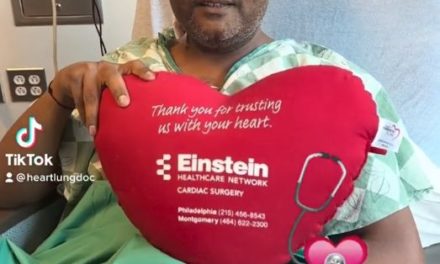
In this video, I discuss a 68-year-old patient with severe aortic stenosis and significant, ultimately critical, coronary artery disease. While TAVR could potentially address his aortic valve, it would not address the entirety of his complex heart disease.
His aortic stenosis had been followed for about five years, beginning with a routine echocardiogram at his cardiologist’s office. Over those five years, the stenosis progressed and became quite severe, largely because of calcium deposits.
He also had a history of a pacemaker, which had been placed about six years earlier at Jefferson Einstein Montgomery Hospital, and a history of atrial fibrillation, although he was not in atrial fibrillation at the time of surgery.
He had the option of TAVR versus open-heart surgery. But when cardiac catheterization was performed at Doylestown Hospital, it revealed significant, in fact quite critical, coronary artery disease.
That changed the decision-making process.
For this patient, we chose conventional surgery: surgical aortic valve replacement combined with coronary artery bypass grafting (CABG). We placed a bovine pericardial biological valve and performed coronary artery bypass grafting using arterial conduits. In one operation, we were able to treat both his valve disease and his coronary disease.
Because of his history of atrial fibrillation and the presence of a pacemaker, we also placed a clip on his left atrial appendage. We do this to reduce the incidence of stroke should atrial fibrillation develop in the future.
TAVR has revolutionized the treatment of aortic stenosis and is an excellent option for many patients, including appropriately selected low-risk patients. But being a candidate for a less invasive procedure does not necessarily mean it is the best long-term strategy.
Age, coronary anatomy, valve anatomy, surgical risk, life expectancy, expected durability, and the possibility of future interventions all matter.
This is exactly why the Heart Team approach is so important. At the Bruce & Robbi Toll Heart and Vascular Institute at Jefferson Health, cardiologists, interventional cardiologists, cardiac surgeons, imaging specialists, and other members of the cardiovascular team work together to determine the best treatment strategy for each individual patient.
For this patient, conventional surgery allowed us to address both problems at the same time: the severely narrowed aortic valve and the significant coronary artery disease.
And five days after surgery, he was walking the halls and reported feeling fantastic, with no pain at all. We use several techniques to help reduce postoperative pain, including cryoablation of the intercostal spaces and local anesthetics such as Marcaine.
His decision to have surgery at Jefferson Einstein Montgomery was also personal. He had been following my work on TikTok, and I had previously operated on his son.
His family history was significant as well. His mother had undergone triple bypass surgery twice, and his brother died from a heart attack. Even when patients and their families take great care of themselves, genetics can play an important role. That is why we recommend that patients see their primary care physician every year and that patients who are at high risk, like him and his family members, maintain regular care with cardiology.
He had been receiving cardiology care with CCP Cardiology in Lansdale, which is a terrific group, before ultimately coming to Jefferson Einstein Montgomery for his surgery.
Technology continues to give us more options. Our responsibility is to use those options thoughtfully.
Sometimes the best choice is TAVR. Sometimes it is conventional surgery.
The goal should always be the same: the right procedure, for the right patient, at the right time.
Interested in my book? You can buy it on Amazon!
(𝘛𝘩𝘦 𝘷𝘪𝘦𝘸𝘴 𝘦𝘹𝘱𝘳𝘦𝘴𝘴𝘦𝘥 𝘪𝘯 𝘮𝘺 𝘱𝘰𝘴𝘵𝘴 𝘢𝘳𝘦 𝘮𝘺 𝘰𝘸𝘯 𝘢𝘯𝘥 𝘥𝘰 𝘯𝘰𝘵 𝘳𝘦𝘱𝘳𝘦𝘴𝘦𝘯𝘵 𝘵𝘩𝘦 𝘷𝘪𝘦𝘸𝘴 𝘰𝘧 𝘮𝘺 𝘦𝘮𝘱𝘭𝘰𝘺𝘦𝘳 𝘰𝘳 𝘢𝘯𝘺 𝘰𝘳𝘨𝘢𝘯𝘪𝘻𝘢𝘵𝘪𝘰𝘯.)
Recent Posts

When the Right Heart Valve Changes: A Fourth Operation After 14 Years
A patient’s remarkable valve history led to a fourth open-heart operation, not because her mechanical valve failed, but because her medical circumstances changed.

Sleep Apnea and Your Heart: Why Your Sleep Matters
Sleep apnea isn’t just about snoring or feeling tired. Untreated sleep apnea can put stress on the cardiovascular system, making sleep an important part of taking care of your heart.

Congratulations to Anastasia Arce, PA-C, on the APC Excellence Award
Congratulations to Anastasia Arce, PA-C, on receiving the Jefferson Health APC Excellence Award. Anastasia is an invaluable member of our Cardiac Surgery team, and this recognition is so well deserved.

Healthcare Doesn’t Take Holidays
Hospitals don’t close for holidays. Heart attacks don’t check the calendar, emergencies still happen, and patients still need someone at their bedside. I want to thank the healthcare workers who continue showing up when others are celebrating.

A Beautiful Day at Jefferson Einstein Montgomery Hospital
Sometimes you just have to stop for a moment, look around, and appreciate where you are. Today was one of those days, and I’m grateful for the people, the purpose, and the privilege of doing work that matters.

Your Heart Doesn’t Have an Off Season
As the seasons change, our healthy routines can change too. But your heart doesn’t have an off season. Here’s how to keep taking care of your heart through fall and the holidays.
Featured
Pages
- Learn about heart valves. Heart Valves
- Read testimonials. Testimonials
- Did you know I have a consulting firm? Singer Heart/Lung Consulting
- Check out my TedTalk! Defining Success
Links
- Links page with more information about your heart. Links
- Dr. Adam Pick's Site: heart-valve-surgery.com