At the outset, I’d like to say that this video is not about politics. Like all of my videos, it’s about educating the public on important health issues.
I was saddened to hear about the sudden passing of Senator Lindsey Graham. Regardless of our political beliefs, this is first and foremost a human tragedy. He served our nation in the United States Air Force and devoted decades to public service. My thoughts are with his family, friends, and everyone whose lives he touched.
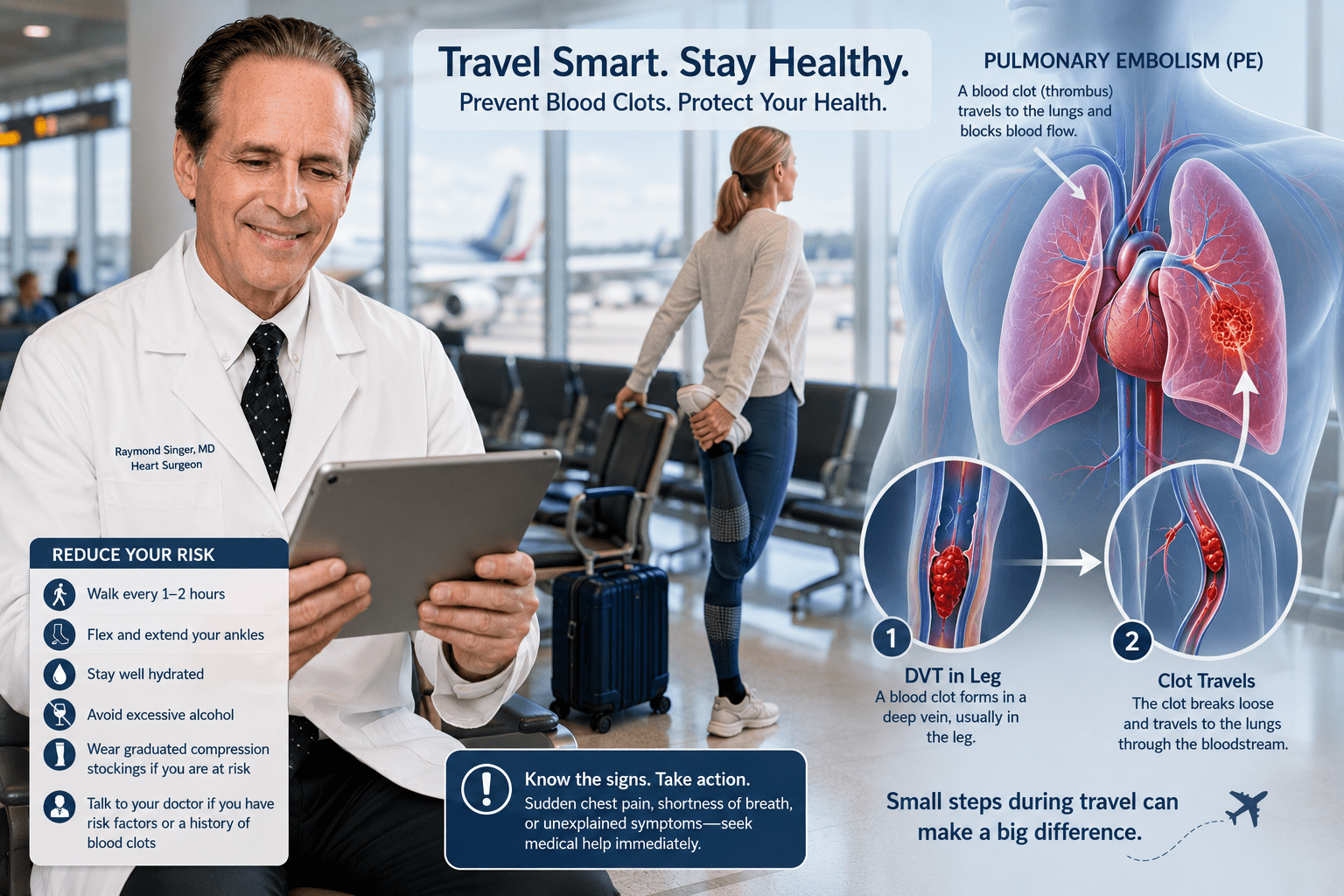
As of today, no official cause of death has been released. We know he suffered a sudden cardiac arrest, but it’s important to understand that cardiac arrest is not a diagnosis. It is the final event that can result from many different medical conditions, including a heart attack, dangerous heart rhythm disturbances, cardiomyopathy, an aortic catastrophe, or a pulmonary embolism.
Rather than speculate before the facts are known, I’d like to use this opportunity to discuss one potentially preventable medical condition: pulmonary embolism (PE).
What Is a Pulmonary Embolism?
A pulmonary embolism occurs when a blood clot, usually beginning as a deep vein thrombosis (DVT) in the legs, breaks loose and travels to the lungs.
A large clot can block blood flow through the lungs, causing sudden collapse, cardiac arrest, and, tragically, death.
Who Is at Risk?
One recognized risk factor for developing a DVT is prolonged immobility, especially during long airplane flights or extended travel.
Most travelers will never develop a blood clot, but the risk is increased in people who have:
- A previous DVT or pulmonary embolism
- Recent surgery
- Active cancer
- Obesity
- Pregnancy
- Inherited clotting disorders
- Estrogen use
- Certain other medical conditions
This topic is especially meaningful to me because I lost a dear friend and colleague to a pulmonary embolism after returning from a vacation in Vietnam. He was only 50 years old, and I have never forgotten that loss.
How to Reduce Your Risk While Traveling
There are several simple steps that can help lower your risk during long trips:
- Get up and walk every hour or two whenever possible.
- While seated, flex and extend your ankles and contract your calf muscles frequently.
- Stay well hydrated.
- Avoid excessive alcohol, which can contribute to dehydration.
If you’re at increased risk, consider wearing properly fitted graduated compression stockings during long flights.
If you’ve previously had a blood clot or have another significant risk factor, speak with your physician before traveling. In selected high-risk patients, preventive anticoagulation, such as a dose of Lovenox®, may be appropriate, but that decision should always be made with your healthcare provider based on your individual risk.
A Final Thought
Sudden cardiac arrest affects more than 350,000 Americans outside the hospital every year, making it one of the leading causes of death in the United States.
Today isn’t about politics or speculation. It’s about showing compassion for a family that has lost a loved one, honoring the life of a public servant, and taking a moment to learn something that could one day save a life, perhaps even your own.
If this video helps even one person recognize the dangers of blood clots or take simple precautions before a long trip, then it is worth sharing.
Interested in my book? You can buy it on Amazon!
(𝘛𝘩𝘦 𝘷𝘪𝘦𝘸𝘴 𝘦𝘹𝘱𝘳𝘦𝘴𝘴𝘦𝘥 𝘪𝘯 𝘮𝘺 𝘱𝘰𝘴𝘵𝘴 𝘢𝘳𝘦 𝘮𝘺 𝘰𝘸𝘯 𝘢𝘯𝘥 𝘥𝘰 𝘯𝘰𝘵 𝘳𝘦𝘱𝘳𝘦𝘴𝘦𝘯𝘵 𝘵𝘩𝘦 𝘷𝘪𝘦𝘸𝘴 𝘰𝘧 𝘮𝘺 𝘦𝘮𝘱𝘭𝘰𝘺𝘦𝘳 𝘰𝘳 𝘢𝘯𝘺 𝘰𝘳𝘨𝘢𝘯𝘪𝘻𝘢𝘵𝘪𝘰𝘯.)
Recent Posts
It’s Never Too Late to Invest in Your Health
You don’t need to be an athlete or 25 to invest in your health. Discover why movement, emotional well-being, and purpose matter at every age.
Two Valves Repaired: Seeing the Heart Work Better
A cardiac surgeon explains the repair of two severely leaking heart valves, including what the echocardiogram showed before and after surgery.
73 Years Young: Strength Has No Age Limit
At 73, Joseph Lisa is still getting stronger. Discover why age doesn’t have to define our limits and why staying active matters for a longer, healthier life.

Should We Be Afraid of AI?
Should we be afraid of AI? Dr. Scott Silverstein, a pioneer in medical informatics, shares why human judgment, experience, and responsible innovation matter more than ever.

Extraordinary Care Around the Clock
While most of us are sleeping, the cardiac surgery night crew at Jefferson Einstein Montgomery Hospital is working tirelessly to keep patients safe, supported, and cared for. Their dedication, compassion, and teamwork make extraordinary care possible around the clock.

Not Every Patient With Aortic Stenosis Is Best Served by the Least Invasive Approach
Not every patient with aortic stenosis is best served by the least invasive approach. For this 68-year-old patient, severe aortic stenosis and critical coronary artery disease made surgical valve replacement and CABG the right choice.
Featured
Pages
- Learn about heart valves. Heart Valves
- Read testimonials. Testimonials
- Did you know I have a consulting firm? Singer Heart/Lung Consulting
- Check out my TedTalk! Defining Success
Links
- Links page with more information about your heart. Links
- Dr. Adam Pick's Site: heart-valve-surgery.com