Let’s talk about sleep apnea.
Have you ever been told that you snore loudly, stop breathing during sleep, or wake up feeling exhausted the next day? If so, you may have obstructive sleep apnea, a common condition that can have a major impact on both your heart and overall health.
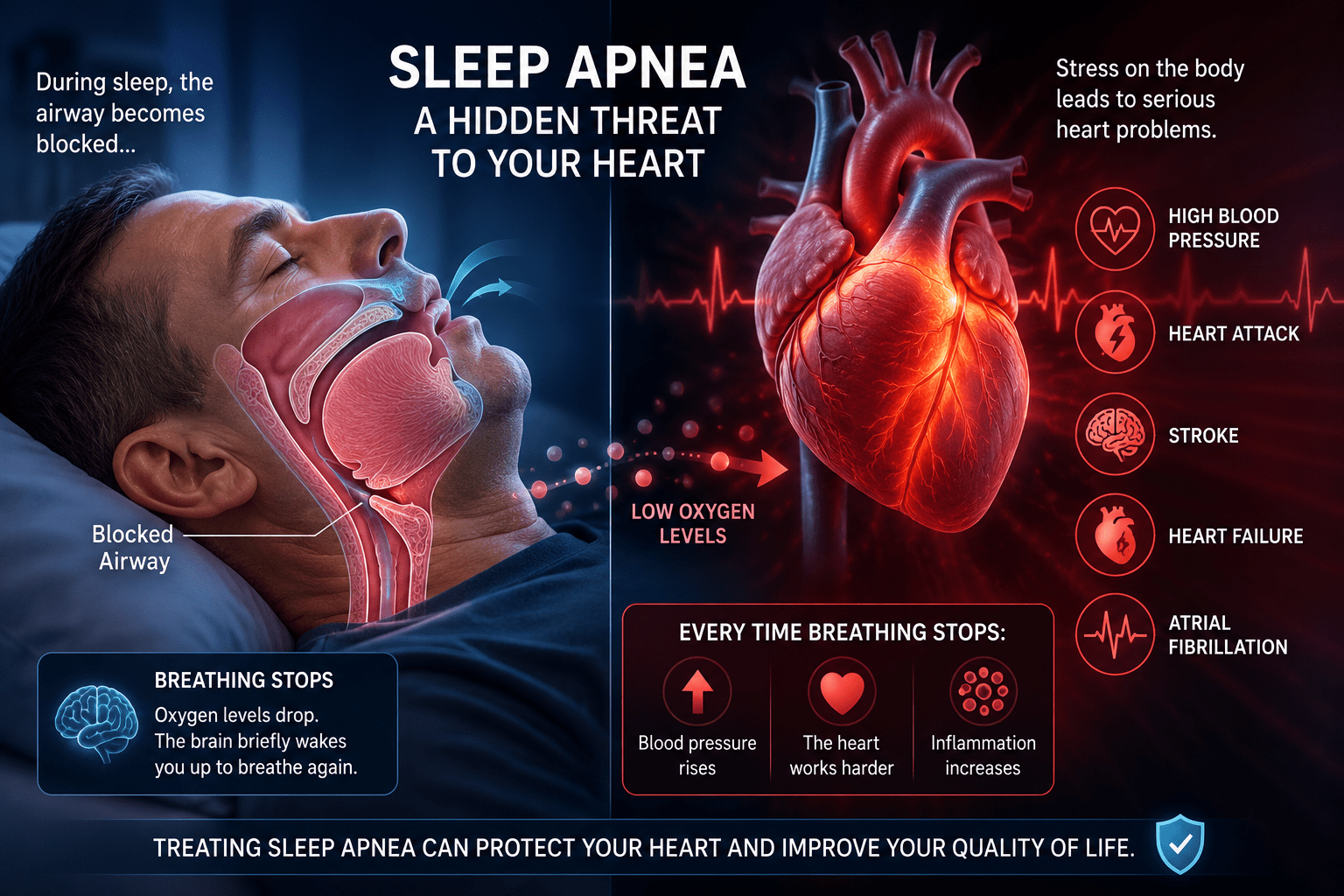
Obstructive sleep apnea occurs when the muscles in the back of the throat relax during sleep, causing the airway to become partially or completely blocked. When this happens, oxygen levels drop, and the brain briefly wakes the body so breathing can resume.
This cycle can occur dozens or even hundreds of times each night, often without the person realizing it.
Many people think sleep apnea is simply a nuisance because of the snoring, but it is actually a serious medical condition. Repeated drops in oxygen place tremendous stress on the cardiovascular system.
Every time breathing stops, the body releases stress hormones such as adrenaline. Blood pressure rises, the heart works harder, and inflammation increases throughout the body.
Over time, untreated sleep apnea can contribute to:
- High blood pressure
- Heart attacks
- Stroke
- Heart failure
- Abnormal heart rhythms such as atrial fibrillation
In fact, sleep apnea is one of the most common underlying conditions seen in patients with atrial fibrillation. Patients who undergo treatment for AFib often experience better outcomes when their sleep apnea is identified and treated as well.
Sleep apnea can also worsen coronary artery disease and increase the risk of sudden cardiac death. The combination of low oxygen levels, inflammation, and elevated blood pressure creates a perfect storm for cardiovascular disease.
Common symptoms of sleep apnea include:
- Loud snoring
- Witnessed pauses in breathing
- Gasping during sleep
- Excessive daytime fatigue
- Morning headaches
- Poor concentration
- Memory problems
- Difficulty controlling blood pressure
However, some people may have very few symptoms and remain unaware that they have the condition.
The good news is that sleep apnea is highly treatable.
Weight loss can be extremely effective for some individuals. Other treatment options include:
- CPAP therapy
- Oral appliances
- Positional therapy
- Surgical procedures in select cases
Newer weight loss medications may also help reduce the severity of sleep apnea in some patients.
If you snore heavily, feel excessively tired during the day, or have heart disease, consider discussing sleep apnea with your physician. A simple sleep study can often provide answers.
As heart surgeons and cardiologists, we spend a great deal of time treating the consequences of cardiovascular disease. Sometimes one of the most important things we can do is identify and treat an underlying cause.
Sleep apnea may occur while you’re sleeping, but its effects can follow you throughout the day and throughout your life.
I’m Dr. Raymond Singer.
I hope this was helpful, and I’ll see you next time.
Interested in my book? You can buy it on Amazon!
(𝘛𝘩𝘦 𝘷𝘪𝘦𝘸𝘴 𝘦𝘹𝘱𝘳𝘦𝘴𝘴𝘦𝘥 𝘪𝘯 𝘮𝘺 𝘱𝘰𝘴𝘵𝘴 𝘢𝘳𝘦 𝘮𝘺 𝘰𝘸𝘯 𝘢𝘯𝘥 𝘥𝘰 𝘯𝘰𝘵 𝘳𝘦𝘱𝘳𝘦𝘴𝘦𝘯𝘵 𝘵𝘩𝘦 𝘷𝘪𝘦𝘸𝘴 𝘰𝘧 𝘮𝘺 𝘦𝘮𝘱𝘭𝘰𝘺𝘦𝘳 𝘰𝘳 𝘢𝘯𝘺 𝘰𝘳𝘨𝘢𝘯𝘪𝘻𝘢𝘵𝘪𝘰𝘯.)
Recent Posts
Your Heart Was Made to Move
What is the best exercise for your heart? There isn’t just one answer. Dr. Raymond Singer explains how aerobic exercise, strength training, flexibility, balance, and simple daily movement can all support cardiovascular health.
Can Sleep Affect Your Waistline?
We often think about diet and exercise when we talk about maintaining a healthy weight. But there may be a third piece of the puzzle: sleep. Dr. Raymond Singer explores how insufficient sleep can affect hunger, metabolism, cravings, abdominal fat, and cardiovascular health.

The Heart-Lung Machine: A Jefferson Legacy That Changed Medicine
More than 70 years ago, Jefferson surgeon and researcher John H. Gibbon Jr. helped make what once seemed impossible a reality: temporarily replacing the functions of the heart and lungs with a machine so surgeons could operate on a stopped heart.
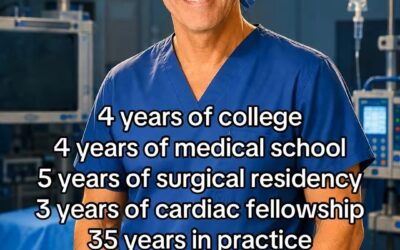
50 Years Later: A Journey Home
As I prepare for my 50th high school reunion, I find myself reflecting on a journey that has taken me from Cheltenham to college, medical school, surgical training, decades of practice, and ultimately back home to care for the community where it all began.
GLP-1 Medications and Alcohol: Can They Reduce Cravings?
Emerging research suggests GLP-1 medications may do more than help with weight loss. They may also reduce alcohol cravings by influencing the brain’s reward pathways.
Heart Symptoms You Should Never Ignore
Not every symptom means heart disease, but some warning signs should never be ignored. Dr. Raymond Singer shares five important symptoms that deserve prompt medical evaluation and explains when it’s time to call 911.
Featured
Pages
- Learn about heart valves. Heart Valves
- Read testimonials. Testimonials
- Did you know I have a consulting firm? Singer Heart/Lung Consulting
- Check out my TedTalk! Defining Success
Links
- Links page with more information about your heart. Links
- Dr. Adam Pick's Site: heart-valve-surgery.com