Patients often think of cardiac surgery in terms of the operation itself. They think about bypass surgery, valve repair, aortic aneurysms, or newer technologies such as robotics and TAVR procedures.
While those advances matter tremendously, the future of cardiac surgery should be about something much bigger: the patient experience.
For decades, especially during the early years of cardiac surgery, success was measured almost exclusively by whether a patient survived the operation. As surgical techniques improved, attention expanded to complications and quality metrics. Today, a more important question is being asked:
What was the patient’s journey like?
From the moment patients are told they need heart surgery, many experience fear and uncertainty. They worry about pain, recovery, their families, and whether they will ever return to a normal life.
Because of this, the responsibility of a heart surgeon extends far beyond the operating room.
It starts with listening.
Patients want to be heard. They want answers to their questions. They want honesty, transparency, and compassion. They want to know they are more than just another case on a schedule.
The patient experience begins with access to care. How quickly can a patient get an appointment? How easy is it to reach a physician? How effectively do cardiac surgeons communicate with referring doctors and family members?
Education is another critical component. Patients deserve to understand their condition, their treatment options, and what to expect before and after surgery.
Then comes the operation itself.
Advances in technology, minimally invasive techniques, enhanced recovery protocols, and improved pain management have transformed the surgical experience. Many patients are surprised to learn that modern cardiac surgery often involves less pain, faster recovery, and earlier discharge than ever before.
However, some of the most meaningful moments occur after surgery.
Patients remember how they were treated. They remember the nurse who held their hand when they were afraid. They remember the physician assistant or nurse practitioner who answered their questions in the middle of the night. They remember the physical therapist who encouraged them to take that first difficult walk. They remember whether the surgeon took the time to sit down, make eye contact, and reassure their family.
Outstanding patient experiences are not created by one person. They are created by an entire team working together toward a shared mission.
At the end of the day, great cardiac surgery is not just about fixing hearts.
It is about caring for the human being attached to that heart.
The best cardiac surgery programs of the future will not be measured solely by mortality rates or surgical volume. They will also be measured by trust, compassion, communication, empathy, and the experiences patients and families carry with them long after leaving the hospital.
Patients may not remember every technical detail of their operation, but they will never forget how they were made to feel.
I’m Dr. Raymond Singer, and I’ll see you next time.
Interested in my book? You can buy it on Amazon!
(𝘛𝘩𝘦 𝘷𝘪𝘦𝘸𝘴 𝘦𝘹𝘱𝘳𝘦𝘴𝘴𝘦𝘥 𝘪𝘯 𝘮𝘺 𝘱𝘰𝘴𝘵𝘴 𝘢𝘳𝘦 𝘮𝘺 𝘰𝘸𝘯 𝘢𝘯𝘥 𝘥𝘰 𝘯𝘰𝘵 𝘳𝘦𝘱𝘳𝘦𝘴𝘦𝘯𝘵 𝘵𝘩𝘦 𝘷𝘪𝘦𝘸𝘴 𝘰𝘧 𝘮𝘺 𝘦𝘮𝘱𝘭𝘰𝘺𝘦𝘳 𝘰𝘳 𝘢𝘯𝘺 𝘰𝘳𝘨𝘢𝘯𝘪𝘻𝘢𝘵𝘪𝘰𝘯.)
Recent Posts
The Power of Culture in Healthcare: Why Great Teams Deliver Better Care
In healthcare, metrics tell only part of the story. The culture behind a program shapes how people communicate, collaborate, hold one another accountable, and ultimately care for patients.
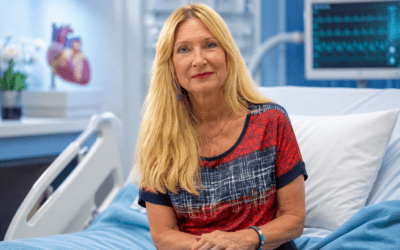
A Tiny Heart Tumor, a Stroke, and a Remarkable Recovery
After suffering a stroke with no clear source, Tayshia Hatcher was found to have a small tumor on her aortic valve. Surgeons removed the benign tumor, preserved her valve, and helped identify what was likely the source of her stroke. Six weeks after surgery, Tayshia reported no pain and no lasting effects from her stroke.
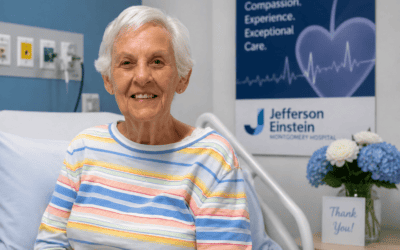
When Open Heart Surgery Is the Best Option
At 82 years old, Rachel Leister underwent triple valve open heart surgery after severe aortic and mitral valve stenosis caused significant shortness of breath. Six weeks later, she is pain-free, feeling great, and ready to get back to walking outdoors.
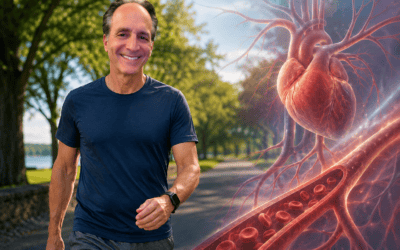
Your Heart Was Made to Move
What is the best exercise for your heart? There isn’t just one answer. Dr. Raymond Singer explains how aerobic exercise, strength training, flexibility, balance, and simple daily movement can all support cardiovascular health.

Can Sleep Affect Your Waistline?
We often think about diet and exercise when we talk about maintaining a healthy weight. But there may be a third piece of the puzzle: sleep. Dr. Raymond Singer explores how insufficient sleep can affect hunger, metabolism, cravings, abdominal fat, and cardiovascular health.
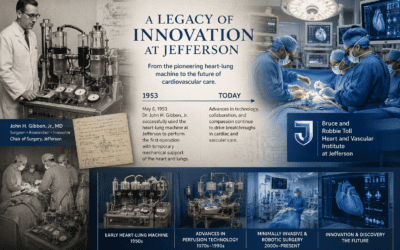
The Heart-Lung Machine: A Jefferson Legacy That Changed Medicine
More than 70 years ago, Jefferson surgeon and researcher John H. Gibbon Jr. helped make what once seemed impossible a reality: temporarily replacing the functions of the heart and lungs with a machine so surgeons could operate on a stopped heart.
Featured
Pages
- Learn about heart valves. Heart Valves
- Read testimonials. Testimonials
- Did you know I have a consulting firm? Singer Heart/Lung Consulting
- Check out my TedTalk! Defining Success
Links
- Links page with more information about your heart. Links
- Dr. Adam Pick's Site: heart-valve-surgery.com