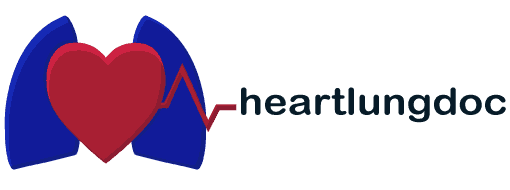
This past week, hundreds of transplant recipients gathered in Philadelphia for what can only be described as the Olympics of Second Chances. The Transplant Games brought together men, women, and children who received life-saving organ transplants. They competed in swimming, track and field, basketball, golf, and many other events.
Think about that for a moment. Many of these athletes were once critically ill. Some depended on machines or oxygen tanks. Others were too sick to walk across a room. Many were told they might not survive without a transplant. Yet today they are running, swimming, laughing, competing, and truly living.
As a cardiac surgeon, I’ve spent my career fighting to save lives. I’ve cared for patients with advanced heart disease, and I’ve had the privilege of seeing firsthand what organ transplantation can accomplish.
The Transplant Games remind us of something very important. Organ donation is not about death. It’s about life. Unfortunately, many myths still surround organ donation. One common misconception is that if you’re registered as an organ donor, doctors won’t work as hard to save your life. Nothing could be further from the truth. When you arrive at a hospital, your healthcare team’s only mission is to save your life. Organ donation is considered only after every possible lifesaving effort has been exhausted and strict medical and legal criteria have been met.
Another myth is that you’re too old to donate. The truth is there is no age limit. What matters most is the health of your organs, not your age. Others worry that religion prohibits organ donation, but most major religions view it as one of the highest acts of compassion and generosity. Many people also assume that existing medical conditions automatically prevent donation. In reality, every potential donor is evaluated individually, and many people with medical conditions can still save lives.
Perhaps the most remarkable part of organ donation is that, in the midst of unimaginable grief, families often make the courageous decision to help complete strangers. One organ donor can save up to eight lives. A donated heart can allow a mother to watch her children grow. A donated liver can save a young father. A donated kidney can free someone from dialysis. A donated lung can allow someone to breathe deeply again.
As physicians, we are fortunate to witness these miracles. We see transplant recipients return to work, celebrate birthdays, attend weddings, hold grandchildren, and pursue dreams they once believed were impossible. That is the true meaning of organ donation. It transforms loss into legacy. It turns tragedy into hope and gives someone a second chance to experience the moments that make life worth living.
If you’ve never registered as an organ donor, I encourage you to learn more and discuss your wishes with your family. Somewhere right now, someone is waiting for the phone call that could save their life. Someday, your decision could be the reason they receive that chance.
The greatest legacy we leave behind is not what we take from this world, but what we give to it. I’m Dr. Raymond Singer. Remember to take care of your heart, and I’ll see you next time.
Interested in my book? You can buy it on Amazon!
(𝘛𝘩𝘦 𝘷𝘪𝘦𝘸𝘴 𝘦𝘹𝘱𝘳𝘦𝘴𝘴𝘦𝘥 𝘪𝘯 𝘮𝘺 𝘱𝘰𝘴𝘵𝘴 𝘢𝘳𝘦 𝘮𝘺 𝘰𝘸𝘯 𝘢𝘯𝘥 𝘥𝘰 𝘯𝘰𝘵 𝘳𝘦𝘱𝘳𝘦𝘴𝘦𝘯𝘵 𝘵𝘩𝘦 𝘷𝘪𝘦𝘸𝘴 𝘰𝘧 𝘮𝘺 𝘦𝘮𝘱𝘭𝘰𝘺𝘦𝘳 𝘰𝘳 𝘢𝘯𝘺 𝘰𝘳𝘨𝘢𝘯𝘪𝘻𝘢𝘵𝘪𝘰𝘯.)
Recent Posts
Look Beyond the Smile: How Are You Really Doing?
Sometimes the person struggling the most is not the person you would expect. They may still go to work, care for their family, answer their texts, and even make you laugh. Dr. Raymond L. Singer asks us to look beyond the smile, ask how someone is really doing, and stay long enough to hear the answer.
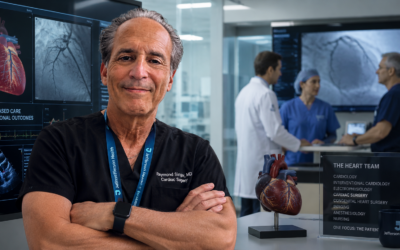
Cardiologist vs. Cardiac Surgeon: What’s the Difference?
What’s the difference between a cardiologist and a cardiac surgeon? Dr. Raymond Singer explains how cardiologists, interventional cardiologists, electrophysiologists, and cardiac surgeons work together as part of today’s modern heart team.
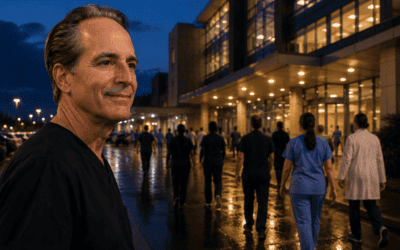
Thank You to the Night Shift
While most of the world is settling in for the evening, the hospital night shift is just beginning its workday. Dr. Raymond Singer reflects on the dedicated people who keep hospitals running around the clock and care for patients during some of the most vulnerable hours of their lives.
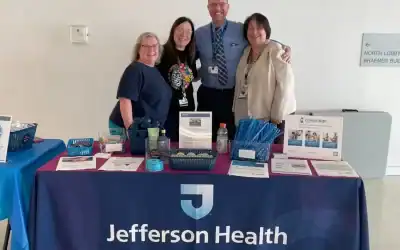
Celebrating a Remarkable Career of Caring
Dr. Raymond Singer celebrates his dear colleague and friend Marie Baker Mo, whose remarkable career has been defined by compassion, leadership, mentorship, and an unwavering commitment to caring for patients and those who care for them.
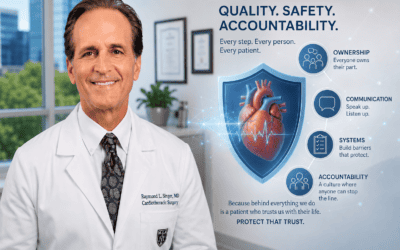
Quality and Patient Safety Must Always Come First
After years of leadership in healthcare quality and patient safety, Dr. Raymond Singer discusses two principles that can help prevent serious safety failures: ownership and communication.
The Power of Culture in Healthcare: Why Great Teams Deliver Better Care
In healthcare, metrics tell only part of the story. The culture behind a program shapes how people communicate, collaborate, hold one another accountable, and ultimately care for patients.
Featured
Pages
- Learn about heart valves. Heart Valves
- Read testimonials. Testimonials
- Did you know I have a consulting firm? Singer Heart/Lung Consulting
- Check out my TedTalk! Defining Success
Links
- Links page with more information about your heart. Links
- Dr. Adam Pick's Site: heart-valve-surgery.com