There are some conversations that are difficult to have, but necessary to have.
This is one of them.
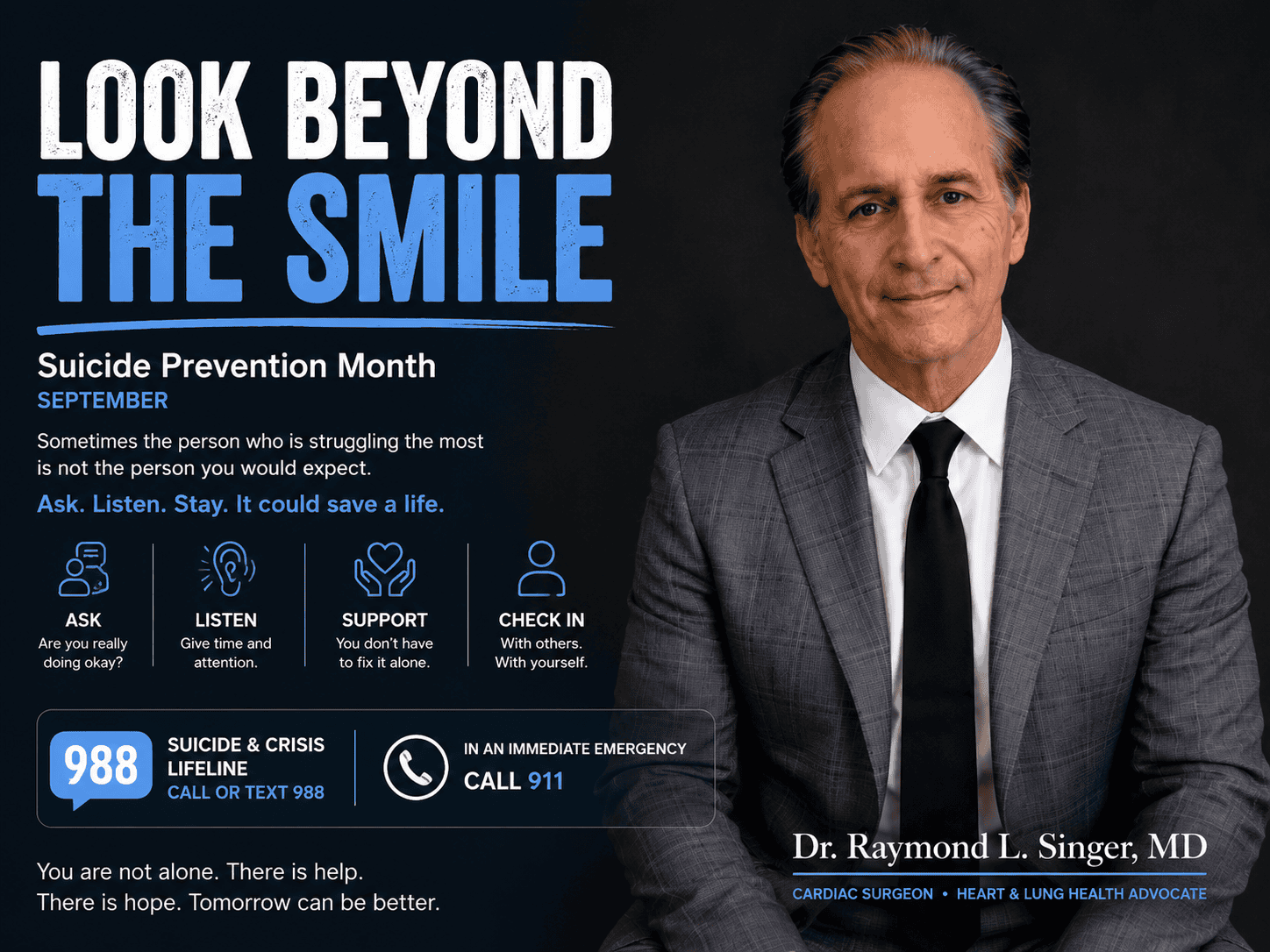
Look Beyond the Smile
Sometimes the person who is struggling the most is not the person you would expect.
They may still come to work. They may still take care of their patients if they work in healthcare. They may still go to school, answer their texts, take care of their family, and they may even still make you laugh.
That is why appearances can be deceiving.
The signs that someone is struggling or considering suicide are not always dramatic. Sometimes they are subtle. Someone may begin withdrawing a little more than usual. Their sleep or mood may change. They may lose interest in things they once enjoyed. There may be increasing alcohol or substance use, expressions of hopelessness, giving things away, or simply a sense that they seem different.
And sometimes, Dr. Singer reminds us, there may be very few outward signs at all.
That is why this conversation matters.
The World People Are Trying to Navigate
For young people especially, the future can feel less predictable than it once did.
The traditional path of getting an education, finding a career, working hard, and building a secure future does not necessarily feel as certain as it did for previous generations. Artificial intelligence is transforming industries. Young adults hear constant conversations about automation, layoffs, and whether the career they are preparing for today will even look the same tomorrow.
That uncertainty does not mean their future is bleak. Far from it.
But it does mean we need to listen when they tell us they are worried about it.
As parents, grandparents, teachers, coaches, mentors, friends, and colleagues, we need to recognize the world people are trying to navigate. Sometimes what looks like ordinary stress from the outside may feel overwhelming to the person carrying it.
Healthcare Professionals Need Care Too
Dr. Singer also speaks directly to those of us in healthcare.
Burnout was already a serious problem before COVID-19. The pandemic placed extraordinary additional demands on physicians, nurses, and everyone working throughout healthcare.
Those of us in healthcare are trained to care for other people.
We are not always very good at admitting when we need someone to care for us.
But this is not exclusively a healthcare problem. Suicide affects every community and every profession.
Sometimes the people who spend their lives taking care of everyone else need someone to stop and ask how they are doing.
Ask the Question, Then Stay for the Answer
Perhaps one of the most important things we can do is also one of the simplest.
Look beyond the smile.
Ask the colleague who seems a little different:
“Are you really doing okay today?”
Ask your son or daughter how they are feeling about their future.
And then give them enough time to actually answer.
That last part matters.
Sometimes we ask, “How are you?” almost automatically. We ask it while moving on to the next thing, already expecting the familiar answer: “Fine.”
But there is a difference between asking because it is polite and asking because you genuinely want to know.
Be willing to stay long enough to hear the answer.
Don’t Forget the Person in the Mirror
Every once in a while, Dr. Singer says, we need to have that same crucial conversation with the person looking back at us in the mirror.
Give yourself an honest health check.
- How am I sleeping?
- Am I enjoying my life?
- Am I becoming isolated?
- Am I relying on alcohol or something else to get me through the day?
- Do I feel hopeless?
- Am I overwhelmed?
- And most importantly, do I need help?
There is no weakness in answering yes.
We perform physical health checks all the time. We check blood pressure. We check cholesterol. We screen for cancer and heart disease.
Perhaps we need to become equally comfortable checking our own emotional health.
Circumstances Can Change
Dr. Singer makes an important point for anyone who may be struggling in a dark moment:
Suicide is not the answer. There is help. There is treatment.
Circumstances change. Careers change. Relationships change.
Tomorrow can look very different from today.
Tomorrow can look a lot better.
But someone who is in the darkest moment of their life may not be able to see that.
Sometimes they need someone else to see it for them.
Look Out for One Another
So look out for your colleagues.
Look out for your friends.
Look out for your children.
And do not forget to look out for yourself as well.
Sometimes the most important question we can ask another human being is also one of the simplest:
“How are you really doing?”
Then be willing to stay long enough to hear the answer.
If someone you know is struggling or thinking about suicide, call or text 988 to reach the Suicide & Crisis Lifeline. In an immediate emergency, call 911.
I hope this difficult conversation helps remind us all to look beyond appearances, listen more carefully, and recognize that sometimes a simple question asked with genuine concern can matter more than we realize.
Interested in my book? You can buy it on Amazon!
(𝘛𝘩𝘦 𝘷𝘪𝘦𝘸𝘴 𝘦𝘹𝘱𝘳𝘦𝘴𝘴𝘦𝘥 𝘪𝘯 𝘮𝘺 𝘱𝘰𝘴𝘵𝘴 𝘢𝘳𝘦 𝘮𝘺 𝘰𝘸𝘯 𝘢𝘯𝘥 𝘥𝘰 𝘯𝘰𝘵 𝘳𝘦𝘱𝘳𝘦𝘴𝘦𝘯𝘵 𝘵𝘩𝘦 𝘷𝘪𝘦𝘸𝘴 𝘰𝘧 𝘮𝘺 𝘦𝘮𝘱𝘭𝘰𝘺𝘦𝘳 𝘰𝘳 𝘢𝘯𝘺 𝘰𝘳𝘨𝘢𝘯𝘪𝘻𝘢𝘵𝘪𝘰𝘯.)
Recent Posts
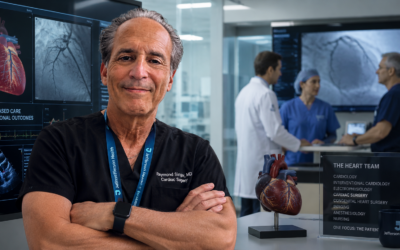
Cardiologist vs. Cardiac Surgeon: What’s the Difference?
What’s the difference between a cardiologist and a cardiac surgeon? Dr. Raymond Singer explains how cardiologists, interventional cardiologists, electrophysiologists, and cardiac surgeons work together as part of today’s modern heart team.

Thank You to the Night Shift
While most of the world is settling in for the evening, the hospital night shift is just beginning its workday. Dr. Raymond Singer reflects on the dedicated people who keep hospitals running around the clock and care for patients during some of the most vulnerable hours of their lives.
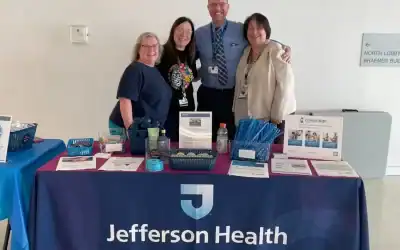
Celebrating a Remarkable Career of Caring
Dr. Raymond Singer celebrates his dear colleague and friend Marie Baker Mo, whose remarkable career has been defined by compassion, leadership, mentorship, and an unwavering commitment to caring for patients and those who care for them.
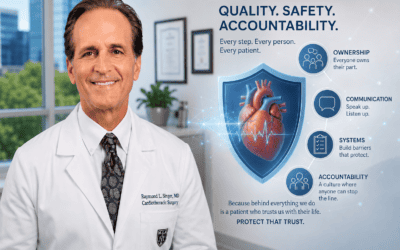
Quality and Patient Safety Must Always Come First
After years of leadership in healthcare quality and patient safety, Dr. Raymond Singer discusses two principles that can help prevent serious safety failures: ownership and communication.
The Power of Culture in Healthcare: Why Great Teams Deliver Better Care
In healthcare, metrics tell only part of the story. The culture behind a program shapes how people communicate, collaborate, hold one another accountable, and ultimately care for patients.
A Tiny Heart Tumor, a Stroke, and a Remarkable Recovery
After suffering a stroke with no clear source, Tayshia Hatcher was found to have a small tumor on her aortic valve. Surgeons removed the benign tumor, preserved her valve, and helped identify what was likely the source of her stroke. Six weeks after surgery, Tayshia reported no pain and no lasting effects from her stroke.
Featured
Pages
- Learn about heart valves. Heart Valves
- Read testimonials. Testimonials
- Did you know I have a consulting firm? Singer Heart/Lung Consulting
- Check out my TedTalk! Defining Success
Links
- Links page with more information about your heart. Links
- Dr. Adam Pick's Site: heart-valve-surgery.com