When it comes to heart surgery, everybody wants the newest technology: smaller incisions, robotics, catheter-based procedures, and now artificial intelligence is playing a major role.
Let me be clear. Many of these advances are extraordinary. They have helped countless patients and will continue to expand. But when it comes to heart surgery, experience still matters most.
One of the most important things I’ve learned in more than three decades as a cardiac surgeon is that good judgment saves lives.
That means not only knowing when to operate, but also knowing when not to operate. It means understanding which procedure is truly best for a particular patient, not simply which one sounds the most attractive.
Patients often ask me, “Doctor, what is the least invasive option?”
My answer is always the same: the least invasive procedure is the one that gives you the safest and most durable result.
The incision is not the operation. A two-inch incision does not matter if the valve fails early, if complications occur, or if the patient ultimately requires a second operation that is even more dangerous than the first.
In heart surgery, experience is not just about technical skill. It is about pattern recognition. It is about managing complications before they become serious or even catastrophic. It is about understanding anatomy, physiology, and risk almost in a three-dimensional way.
Perhaps most importantly, it is about building a culture where the entire team is focused on quality every single day.
I am incredibly fortunate to work with an outstanding team. The best outcomes happen when experience, teamwork, innovation, and judgment all come together.
Technology matters. Innovation matters. But experience still matters too.
Interested in my book? You can buy it on Amazon!
(𝘛𝘩𝘦 𝘷𝘪𝘦𝘸𝘴 𝘦𝘹𝘱𝘳𝘦𝘴𝘴𝘦𝘥 𝘪𝘯 𝘮𝘺 𝘱𝘰𝘴𝘵𝘴 𝘢𝘳𝘦 𝘮𝘺 𝘰𝘸𝘯 𝘢𝘯𝘥 𝘥𝘰 𝘯𝘰𝘵 𝘳𝘦𝘱𝘳𝘦𝘴𝘦𝘯𝘵 𝘵𝘩𝘦 𝘷𝘪𝘦𝘸𝘴 𝘰𝘧 𝘮𝘺 𝘦𝘮𝘱𝘭𝘰𝘺𝘦𝘳 𝘰𝘳 𝘢𝘯𝘺 𝘰𝘳𝘨𝘢𝘯𝘪𝘻𝘢𝘵𝘪𝘰𝘯.)
Recent Posts
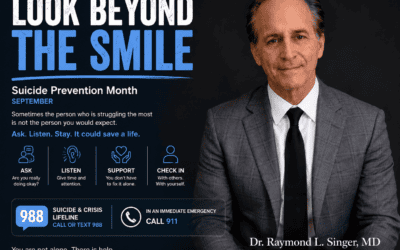
Look Beyond the Smile: How Are You Really Doing?
Sometimes the person struggling the most is not the person you would expect. They may still go to work, care for their family, answer their texts, and even make you laugh. Dr. Raymond L. Singer asks us to look beyond the smile, ask how someone is really doing, and stay long enough to hear the answer.
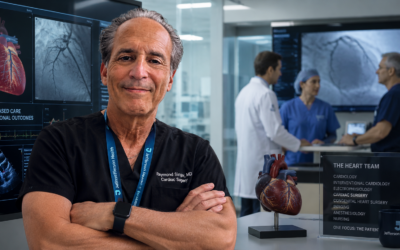
Cardiologist vs. Cardiac Surgeon: What’s the Difference?
What’s the difference between a cardiologist and a cardiac surgeon? Dr. Raymond Singer explains how cardiologists, interventional cardiologists, electrophysiologists, and cardiac surgeons work together as part of today’s modern heart team.

Thank You to the Night Shift
While most of the world is settling in for the evening, the hospital night shift is just beginning its workday. Dr. Raymond Singer reflects on the dedicated people who keep hospitals running around the clock and care for patients during some of the most vulnerable hours of their lives.

Celebrating a Remarkable Career of Caring
Dr. Raymond Singer celebrates his dear colleague and friend Marie Baker Mo, whose remarkable career has been defined by compassion, leadership, mentorship, and an unwavering commitment to caring for patients and those who care for them.
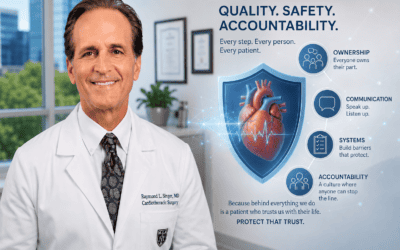
Quality and Patient Safety Must Always Come First
After years of leadership in healthcare quality and patient safety, Dr. Raymond Singer discusses two principles that can help prevent serious safety failures: ownership and communication.

The Power of Culture in Healthcare: Why Great Teams Deliver Better Care
In healthcare, metrics tell only part of the story. The culture behind a program shapes how people communicate, collaborate, hold one another accountable, and ultimately care for patients.
Featured
Pages
- Learn about heart valves. Heart Valves
- Read testimonials. Testimonials
- Did you know I have a consulting firm? Singer Heart/Lung Consulting
- Check out my TedTalk! Defining Success
Links
- Links page with more information about your heart. Links
- Dr. Adam Pick's Site: heart-valve-surgery.com