Can sleep affect your waistline?
I heard my colleague, Dr. Brian McDonough, talking on KYW News Radio here in Philadelphia about how sleep can affect your waistline, and I thought, what a great topic for a tired Monday morning.
And before I get into it, I want to give Brian credit. For decades, Dr. McDonough has been a trusted medical voice on the radio and online.
So, can not getting enough sleep really make it harder to control your weight?
And the answer is yes. And the reasons are fascinating.
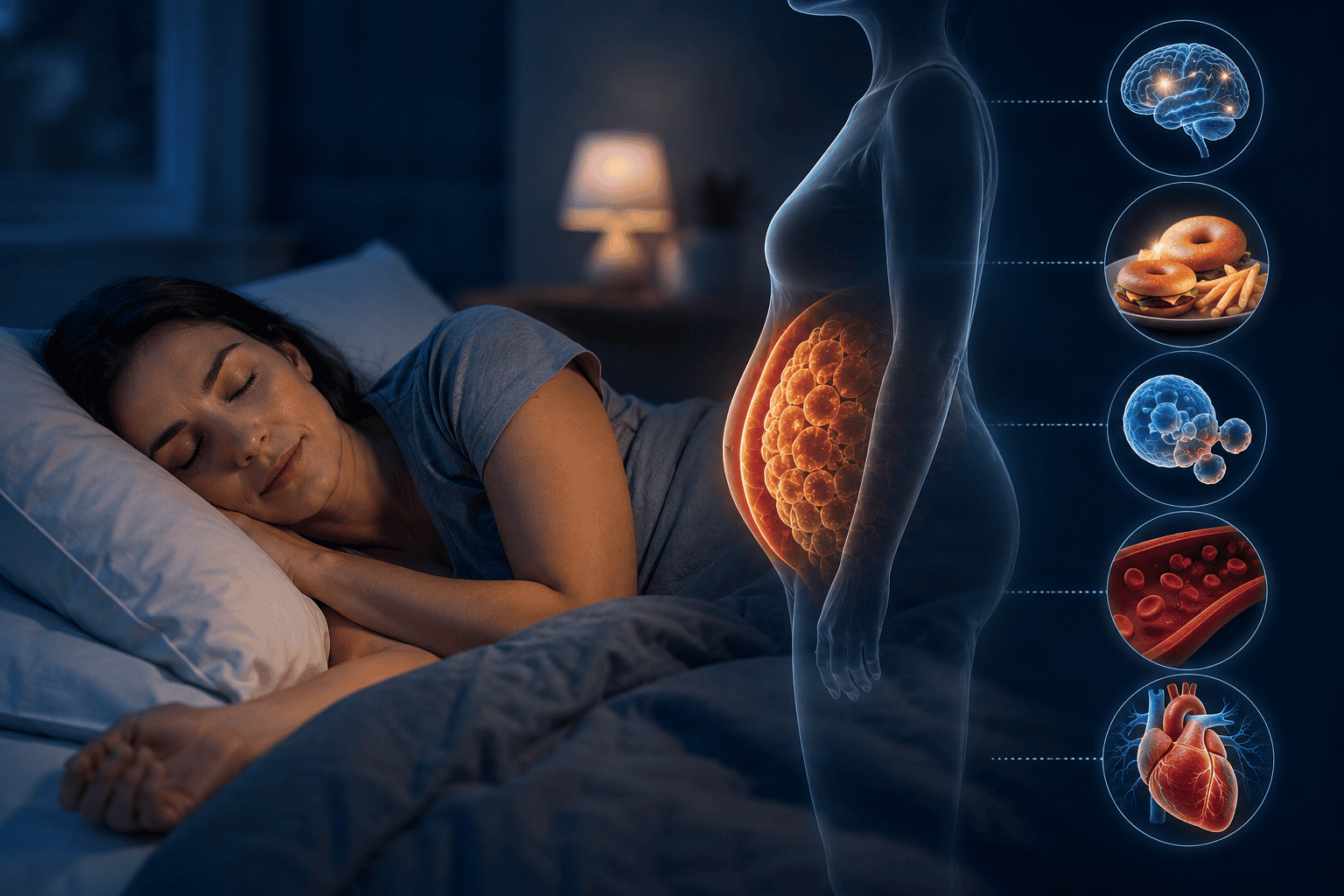
When you don’t get enough sleep, you’re not simply tired the next day. You’re potentially changing the way your body regulates hunger, metabolism, and even the foods that you crave.
One piece involves the hormones that regulate appetite, including ghrelin and leptin. Ghrelin helps signal hunger, while leptin is involved in signaling that you’ve had enough to eat.
Sleep restriction can disrupt these appetite-regulating systems.
But there’s more.
When you’re sleep deprived, your brain’s response to food can change. You’re often more tempted by calorie-dense foods like sweets, carbohydrates, and late-night snacks.
Sure, everyone understands the research behind it, but it is an observation that is very consistent. And quite simply, if you’re awake for more hours, you have more opportunities to eat.
Poor sleep can also interfere with insulin sensitivity and glucose metabolism.
We’ve known this for years. Over time, these metabolic changes can make maintaining a healthy weight more difficult.
And here’s where it becomes especially important from my perspective as a heart surgeon.
We’re not just talking about the number on the scale. We’re not just talking about your total weight.
Research has linked shorter sleep with increased abdominal or visceral fat, the fat around your waistline. And that is the type of fat that is particularly important because it is associated with insulin resistance, inflammation, diabetes, and cardiovascular disease.
So when we talk about maintaining a healthy weight, we usually talk about two things: diet and exercise.
But maybe we should also more consistently talk about the third important part of health, and that’s sleep.
For most adults, aiming for roughly seven to nine hours of quality sleep each night is tough, but it’s a reasonable goal.
Yes, you can eat well, you can exercise, but if you’re chronically sleep deprived, you’re making weight control harder than it needs to be.
So tonight, getting to bed may be doing more for your health and perhaps for your waistline than you realize.
And again, thanks to Dr. Brian McDonough for inspiring today’s conversation.
I’m Dr. Raymond Singer. I hope this was helpful and I’ll see you next time.
Interested in my book? You can buy it on Amazon!
(𝘛𝘩𝘦 𝘷𝘪𝘦𝘸𝘴 𝘦𝘹𝘱𝘳𝘦𝘴𝘴𝘦𝘥 𝘪𝘯 𝘮𝘺 𝘱𝘰𝘴𝘵𝘴 𝘢𝘳𝘦 𝘮𝘺 𝘰𝘸𝘯 𝘢𝘯𝘥 𝘥𝘰 𝘯𝘰𝘵 𝘳𝘦𝘱𝘳𝘦𝘴𝘦𝘯𝘵 𝘵𝘩𝘦 𝘷𝘪𝘦𝘸𝘴 𝘰𝘧 𝘮𝘺 𝘦𝘮𝘱𝘭𝘰𝘺𝘦𝘳 𝘰𝘳 𝘢𝘯𝘺 𝘰𝘳𝘨𝘢𝘯𝘪𝘻𝘢𝘵𝘪𝘰𝘯.)
Recent Posts

Your Heart Was Made to Move
What is the best exercise for your heart? There isn’t just one answer. Dr. Raymond Singer explains how aerobic exercise, strength training, flexibility, balance, and simple daily movement can all support cardiovascular health.

The Heart-Lung Machine: A Jefferson Legacy That Changed Medicine
More than 70 years ago, Jefferson surgeon and researcher John H. Gibbon Jr. helped make what once seemed impossible a reality: temporarily replacing the functions of the heart and lungs with a machine so surgeons could operate on a stopped heart.
50 Years Later: A Journey Home
As I prepare for my 50th high school reunion, I find myself reflecting on a journey that has taken me from Cheltenham to college, medical school, surgical training, decades of practice, and ultimately back home to care for the community where it all began.

GLP-1 Medications and Alcohol: Can They Reduce Cravings?
Emerging research suggests GLP-1 medications may do more than help with weight loss. They may also reduce alcohol cravings by influencing the brain’s reward pathways.

Heart Symptoms You Should Never Ignore
Not every symptom means heart disease, but some warning signs should never be ignored. Dr. Raymond Singer shares five important symptoms that deserve prompt medical evaluation and explains when it’s time to call 911.
5 Myths About Open-Heart Surgery
Fear often comes from misinformation. Dr. Raymond Singer addresses five of the most common myths about open-heart surgery, helping patients understand what modern heart surgery and recovery are really like.
Featured
Pages
- Learn about heart valves. Heart Valves
- Read testimonials. Testimonials
- Did you know I have a consulting firm? Singer Heart/Lung Consulting
- Check out my TedTalk! Defining Success
Links
- Links page with more information about your heart. Links
- Dr. Adam Pick's Site: heart-valve-surgery.com