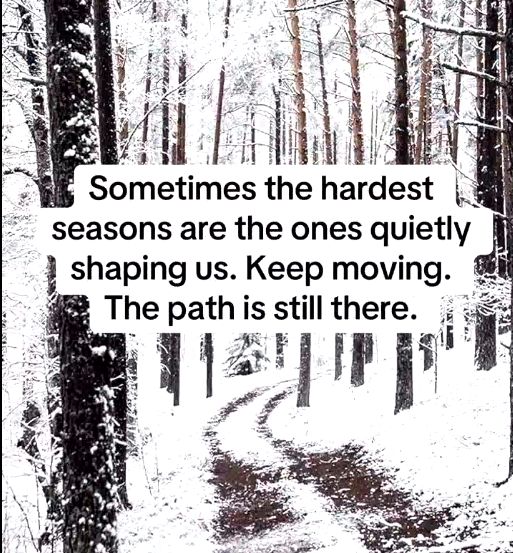
Sometimes the hardest seasons are the ones quietly shaping us.
Keep moving.
The path is still there.
– Posted 1/28/2026
In a world that constantly pulls us forward and backward, grounding yourself in the present is an act of strength. Peace isn’t found by escaping life—it’s found by being fully here. – Posted 1/12/2026
In medicine, we know exactly what a flat line on an EKG means, and it isn’t life. Life is rhythm. It has peaks and valleys, fast moments and slow ones, challenges followed by recovery.
The ups and downs aren’t signs that something is wrong, they are proof that you are alive, growing, and moving forward. Every dip teaches resilience. Every rise renews hope. Even when the rhythm feels irregular, it is still carrying you onward.
If today feels heavy or uneven, take heart. A living heart doesn’t draw a straight line, it beats, adapts, and perseveres. Keep going. Your rhythm matters. ❤️
Shedding to Survive
Every fall, trees release their leaves in beautiful colors. It looks like loss, but in reality, it’s survival. By letting go of leaves, trees conserve water, protect themselves from the harshness of winter, and prepare for new growth in the spring.
In many ways, we’re not so different. Life asks us to shed, too. Old habits, toxic relationships, outdated beliefs, unnecessary burdens—sometimes we have to let them fall away, even if it feels painful.
Just like the tree, this shedding isn’t about weakness or emptiness. It’s about resilience, creating the space and energy we need to endure and to grow.
So if you find yourself in a season of release, trust the process. Shedding is not the end—it’s the preparation for a new beginning.
Winding Road
Life is a winding road with both high peaks and deep valleys—some days everything falls into place, and other days the skies seem clouded with uncertainty. These moments, both joyful and challenging, shape who we are and remind us of the ever-changing nature of the journey.
What truly carries us through is faith—not just in a specific religion, but in the belief that there is something greater guiding us. No matter the path taken, trusting in a higher purpose, the universe, or simply in the goodness yet to come can light the way out of our darkest times.
“Hope lights the darkest paths,” and when everything feels heavy, faith helps remind us we’re never alone, even if we can’t always see the reason behind each twist and turn.
Embracing both the ups and downs, and believing in a strength beyond ourselves, transforms every setback into a stepping stone. So here’s to holding on, letting faith be our compass, and remembering that the sunrise always follows the night.
Suicide Prevention
As a heart surgeon, I dedicate my days to repairing physical hearts. However, I have come to realize that the most fragile struggles often remain invisible on an x-ray or in an operating room. Instead, they are silently carried within the hearts and minds of our loved ones.
This month, during Suicide Prevention Month, I want to remind you that your life is of utmost importance. Just as every heartbeat is precious, so is every story, dream, and individual behind it.
Checking in on someone you love —your children, a spouse, a relative, friend, or coworker— and listening without judgment can be life-saving. Healing sometimes comes from compassion, connection, and the courage to seek help, rather than solely from medicine or surgery.
Let us stand together in hope, remind each other of our worth, and protect not only our hearts but also the spirit that keeps them beating.
If you or someone you know is struggling, please know that help is always within reach. In the U.S., you can dial 988 to connect with the Suicide & Crisis Lifeline.
The first thoughts you have when you wake up are powerful — they can either fuel your day or drain it before it even begins.
Instead of reaching for your phone or rehashing yesterday’s worries, try this:
- Take a deep breath.
- Think of one thing you’re grateful for.
- Smile — even if you have to fake it.
A positive attitude isn’t about ignoring challenges. It’s about choosing to face them with energy, hope, and a clear mind. Start your day with positivity, and you’ll be amazed at how much brighter everything feels.
As long as your heart beats, your purpose burns.
Have no regrets. Just ask yourself one question, “What are you going to do with the time you have left?”

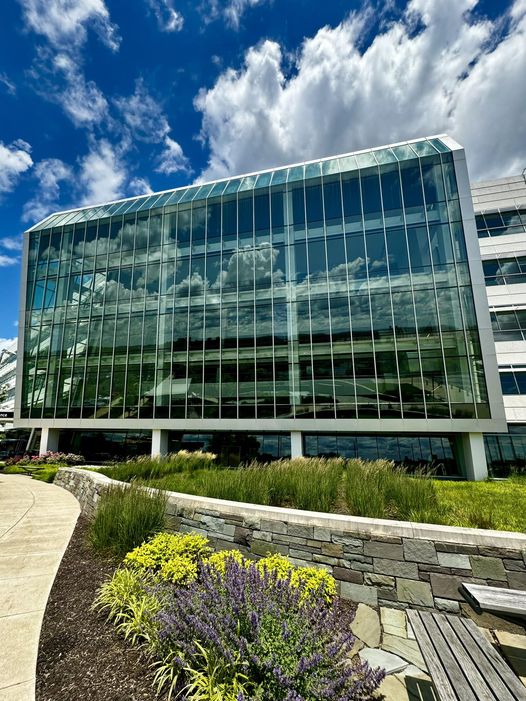
6/4/2024
“There’s a lot more to medicine than just science, son.”
It’s a beautiful day outside and as always, I enjoy taking walks around our stunning campus at Jefferson Einstein Montgomery Hospital. Working at a hospital that is both beautiful and modern is of course a joy. However, the greater good is the impact that these beautiful facilities have on our patients’ recoveries.
Many research studies now reveal how beauty can heal patients on many levels. A study at the University of Michigan found that a high appreciation of beauty helps people recover from anxiety and depression.
At the University of California, Berkeley, research found that people who experience awe in response to nature’s beauty have significant lower levels of inflammation, reducing the risk of depression, diabetes, cardiovascular disease, and other illnesses. In fact, research found that the more often we experience awe, the lower our inflammation levels.
On a personal note, though my father was not a doctor, he gave me the most sage advice when I graduated medical school. At that point, my father had been battling multiple cancers. Through his experience as a patient, having undergone multiple cancer surgeries and treatments, he reminded me at my graduation that “there’s a lot more to medicine than just science son.”
My father understood that a caring and comfortable healing environment, with compassionate doctors and staff, could make all the difference in a patient’s mental wellbeing, and provide patients with more hope and inspiration to recover.
My Dad sadly passed away from his cancers in 1994, most sadly he died on Father’s Day. But his teachings live on in me —and for that, I am forever grateful.

What does it mean to have an “attitude of gratitude?”
It is not merely a matter of being appreciative of things that may or may not occur on any given day of your life. Instead, the type of gratitude that impacts our physical, mental, and spiritual health goes much deeper. It is having the core belief that all of what we receive in life is a gift, that we are granted something more and above what we have earned, such as the unconditional love of a parent. In a sense, when we approach life with this “attitude of gratitude,” what we are doing is simply practicing feeling loved and feeling blessed.
How do we cultivate an “attitude of gratitude?”
Start by writing a “gratitude journal.” Every day write down something good that happened to you that day, something for which you are grateful. Write a letter of appreciation to someone who has touched your life –a teacher, your parent, or a friend. Even more powerful would be to make a “gratitude visit” and express your gratitude in person.
Most of all, we must all learn to focus on what we have, not what we don’t have –to look at the glass as half-full, not half-empty. We need to let go of our useless anxiety over what is missing in our lives and learn to enjoy and appreciate all our blessings. While we cannot deny that certain life events make legitimate demands upon us, it is how we approach these adversities that will most likely determine whether we achieve a positive and healthy outcome.
See all of life’s events –both good and bad—as a blessing. If you can do this, you will feel peace and live a more successful and healthy life.
– Originally Published on Findatopdoc.com
Nature’s Therapeutic Influence
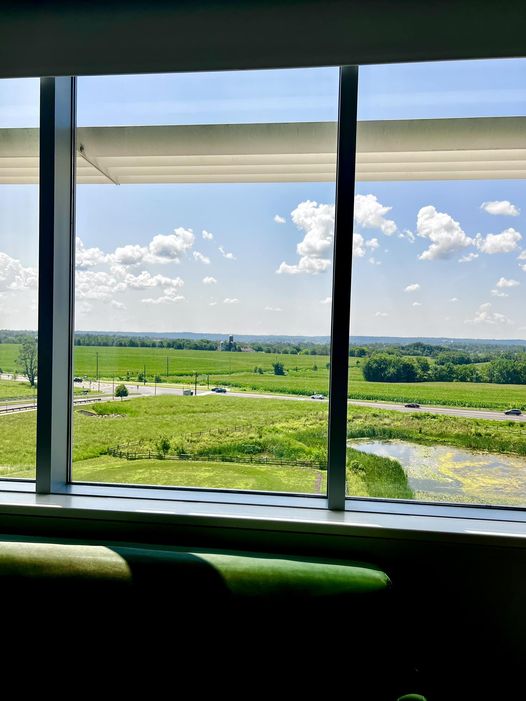
Do natural views have therapeutic influences on hospitalized patients? This is the view from one of my patient’s room, who told me that seeing the outside landscape gave her peace and hope to recover.
Studies suggest that most people —not just patients— have favorable affective responses to nature and prefer natural more than urban scenes. Views of vegetation and especially water may elicit positive feelings, reduce fear, hold attention, and block stressful thoughts.
Translating this to the patient experience may be important, be it a natural view from the window, ambient lighting themes, or ceiling decor. Reducing patient stress may help both with their experience and their outcomes. It may also help the staff experience and thus the retention of staff, as well as help to differentiate the hospital.
“Look into nature, and then you will understand it better.” – Albert Einstein